We start this week’s blog with the good news that 5643 successfully operated a train from Embsay to Bolton Abbey yesterday, double-heading with Taff Vale 0-6-2T No.85 – a rare case of two ‘Taffy Tanks’ operating together! The run successfully drew to a conclusion the winter work on 5643 which has included the replacement of three stays. Well done to Keith and his team.
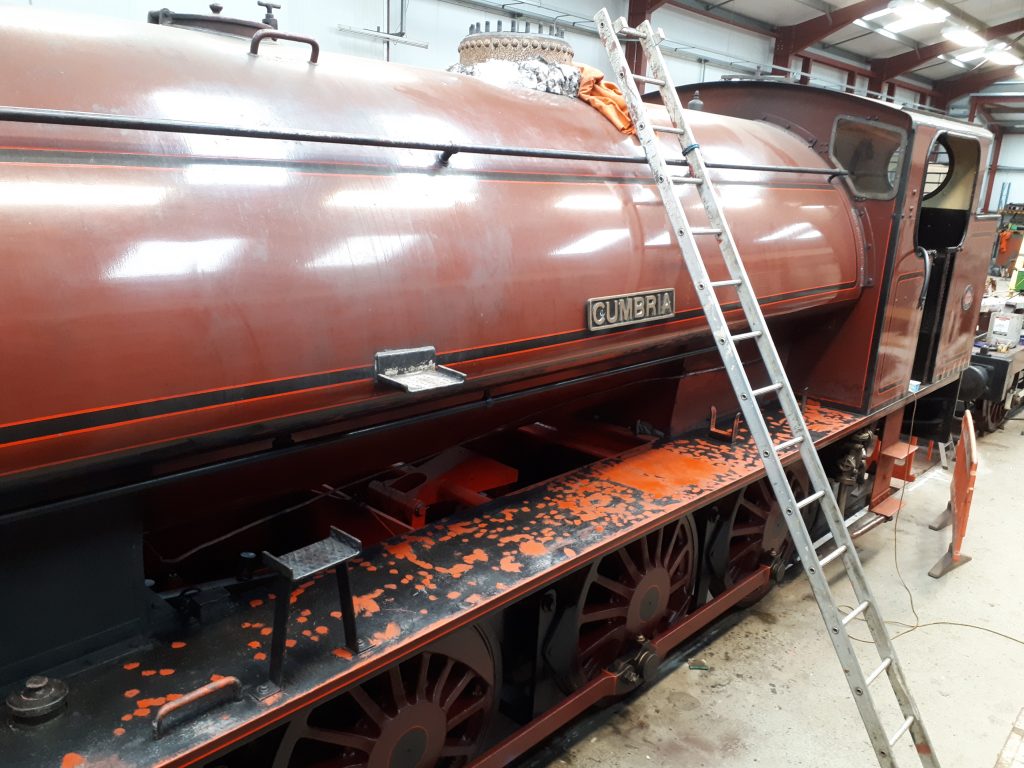 Back at Preston, it has very much been a case of ‘more of the same’ as our members have continued to clean up the Trust’s ‘Austerity’ 0-6-0ST Cumbria. The running plate and cab steps have been rubbed down and primed ready for the undercoat to be applied this week.
 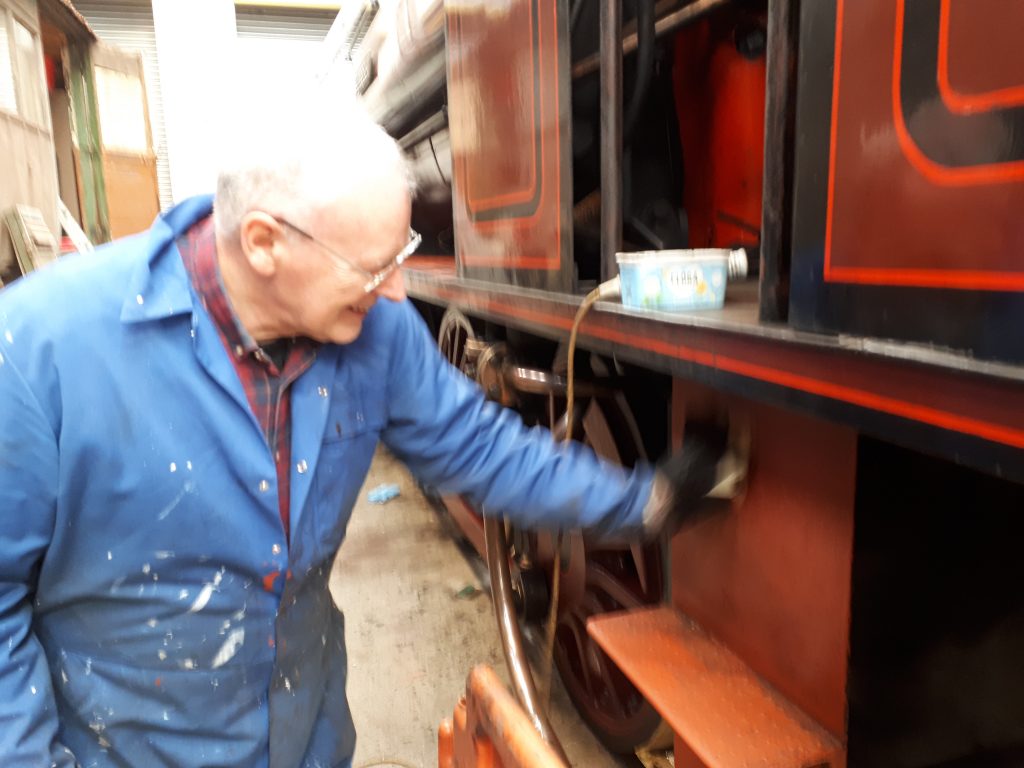 New member Phil Scales is seen here busy with the sand paper.
Work has also continued on Cumbria‘s regulator valve which has given trouble over the past year. We’ll spare you yet another photo of Bob with his feeler gauges but we can report that the sliding brass faces are very much close to being finished. Tim came in on Monday, Wednesday and Saturday to try and tame the ‘J’ pipe, which is also looking much closer to the finishing line.
Alan Ogden has re-appeared from the south west to continue his work on Fluff‘s electrical systems whilst Howard, John Davis and David, among others, have again been working on the frames.
There is promise of further progress on Caliban this week with John Marrow due to arrive tomorrow and Wednesday to re-bore the cylinders.
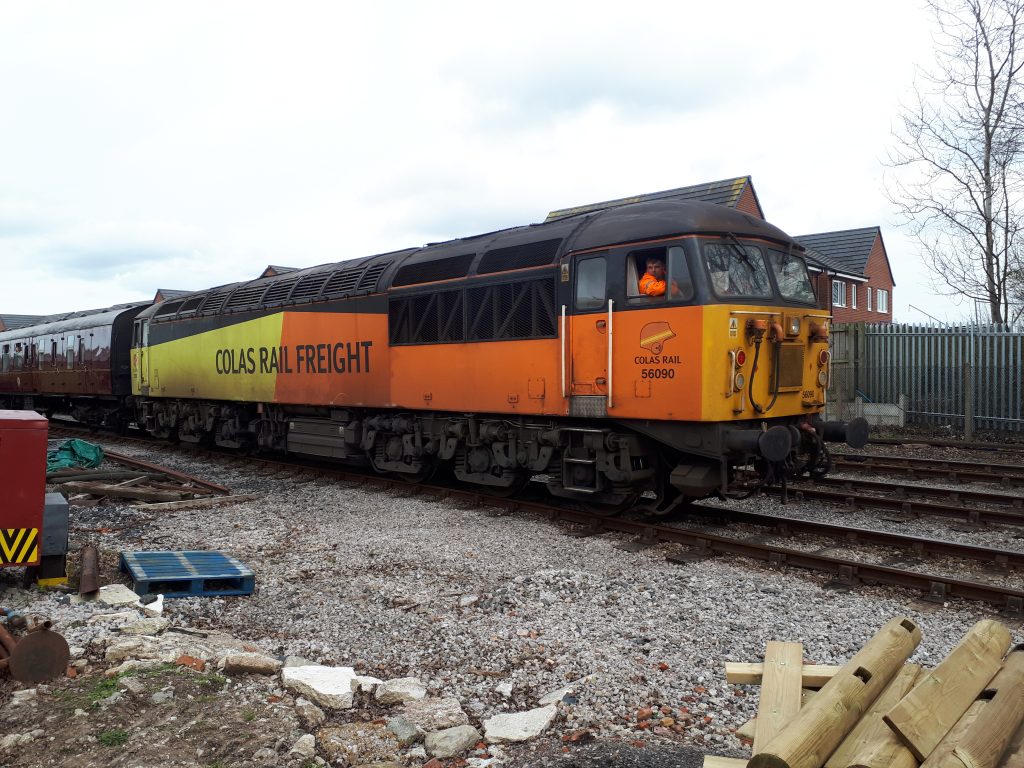 Saturday and Sunday marked the start of 2019 passenger services on the Ribble Steam Railway with a successful Diesel Gala. Guest Colas C0-C0 locomotive No. 56 090 is seen here on the end of one of the trains.
Finally, we conclude with further good news in that the lease for the Furness Railway Trust Shed has been executed today. It appears that years of persistence have paid off and thanks go to everyone who has been involved in what has turned out to be rather a long drawn out process. We have a home that we can rightly call our very own at last!
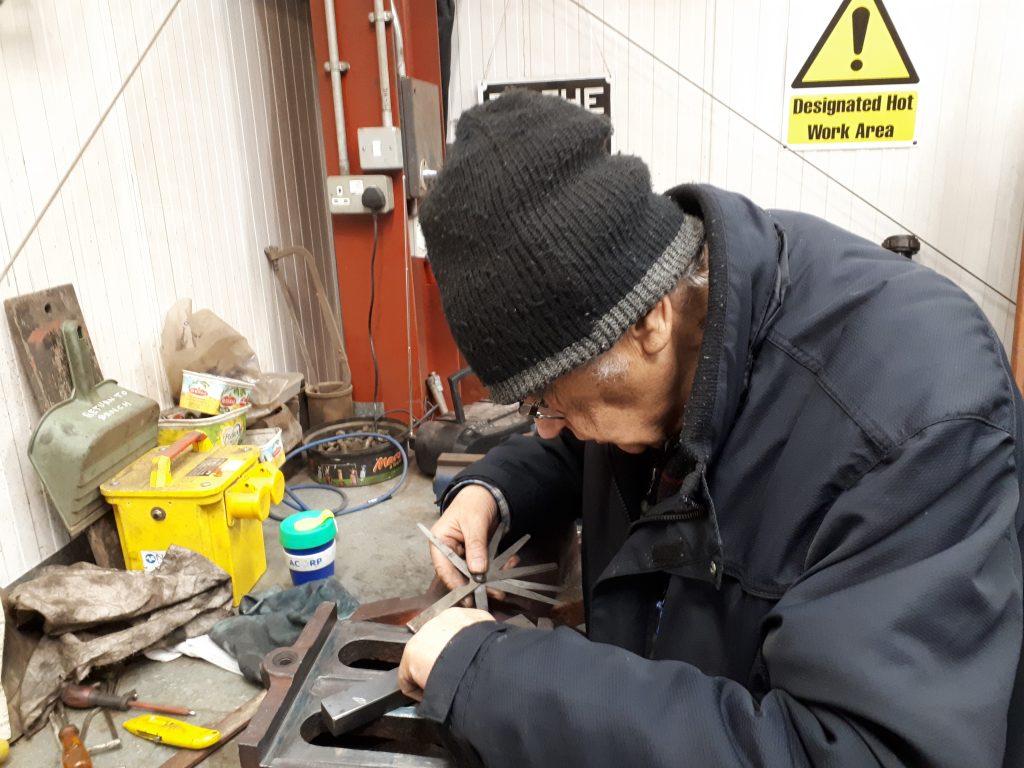 Bob is seen applying his feeler gauge to check test progress. By the end of Friday both the regulator valve and the ‘J’ pipe were deemed to be in much better shape although further work will be required this next week. In view of time pressures, Tim spent another day on the job today.
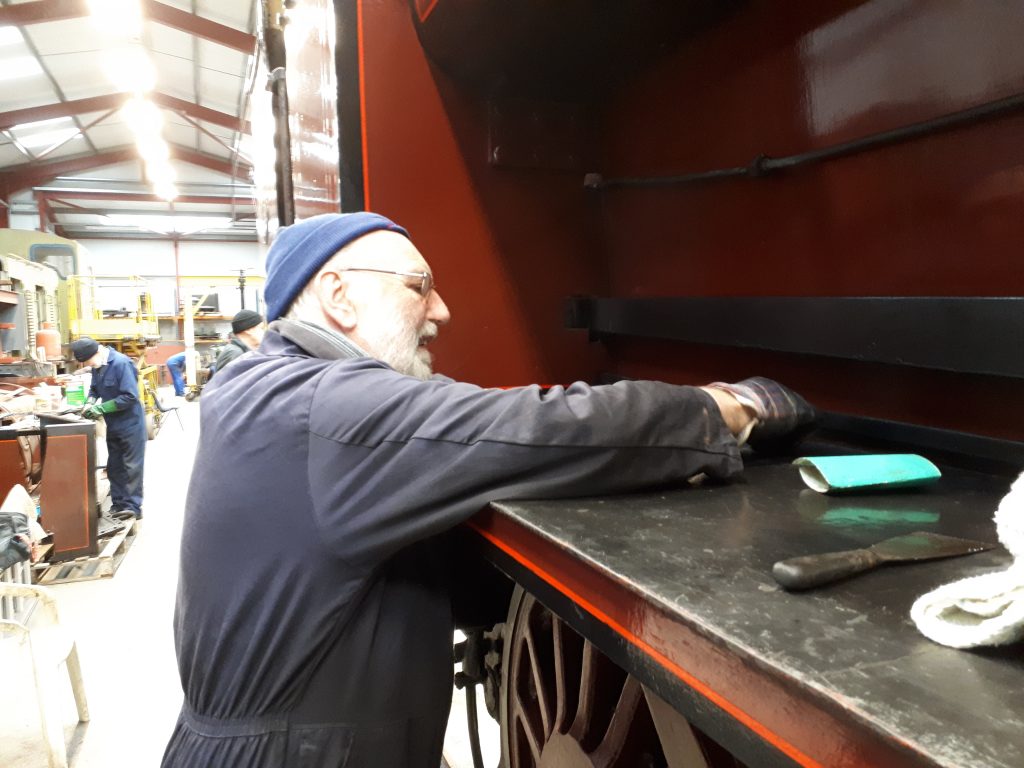 The spruce up of Cumbria has also continued apace, led by John Dixon and assisted by Phil Bell and Phil Scales. The running board is receiving a rub down with a view to giving it a fresh coat of black paint in the near future.
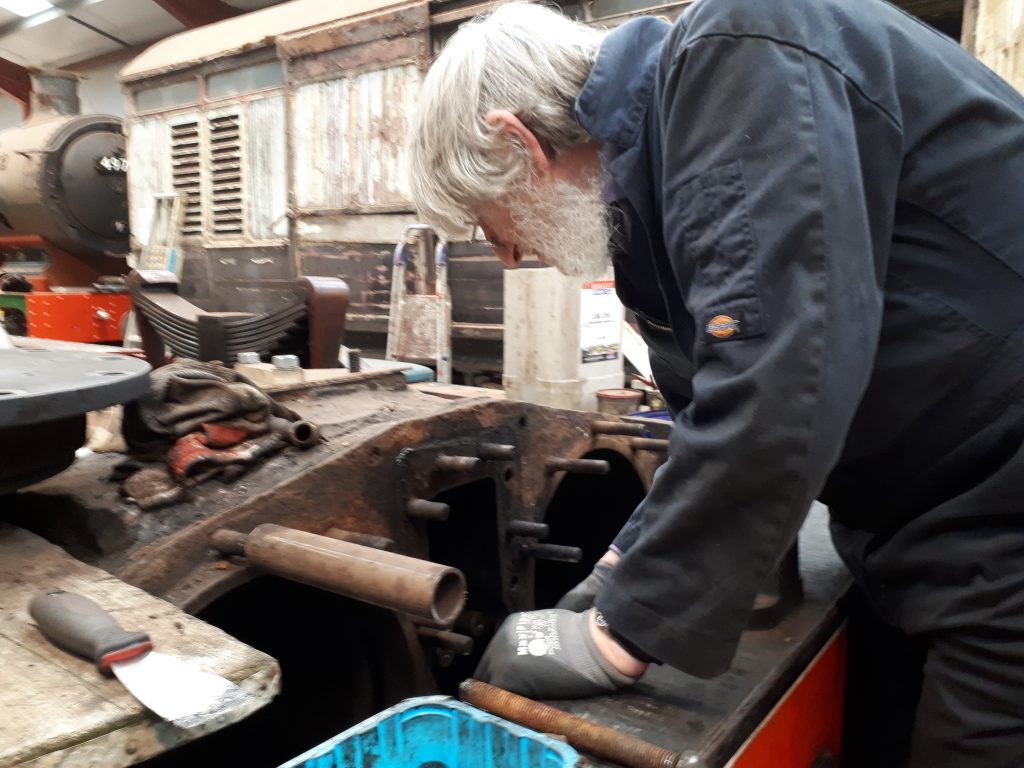 Alan is seen here on Friday inspecting the results of Ade’s endeavours.
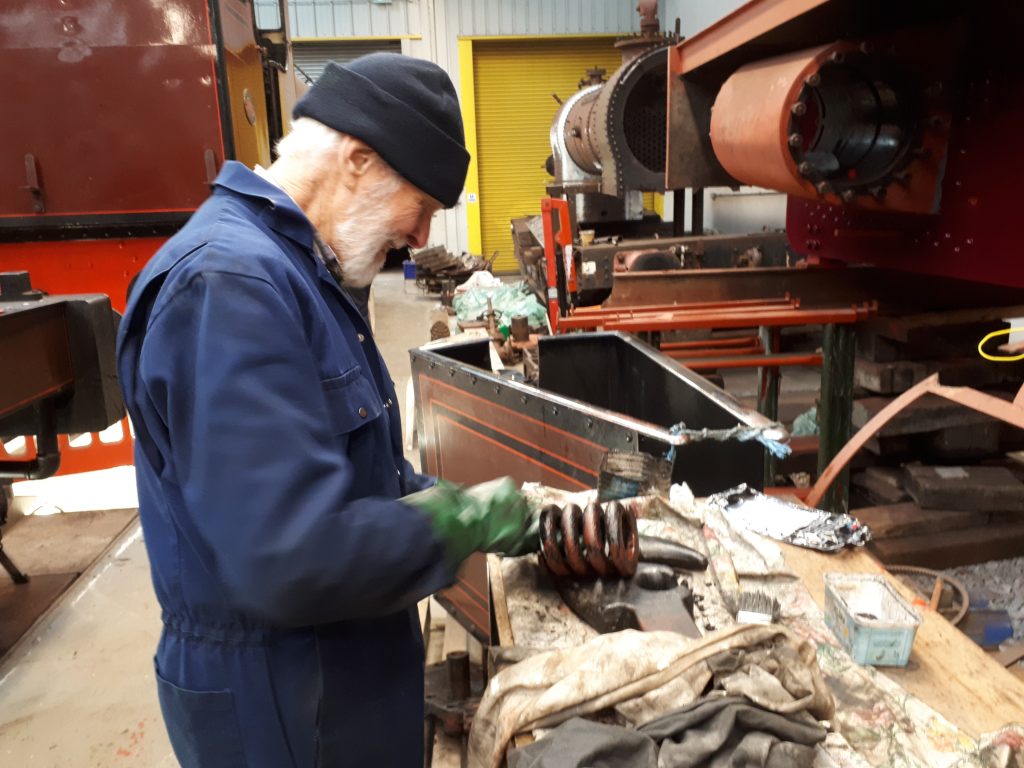 Roger spent more time cleaning, in this case up FR 20’s drawhook spring.
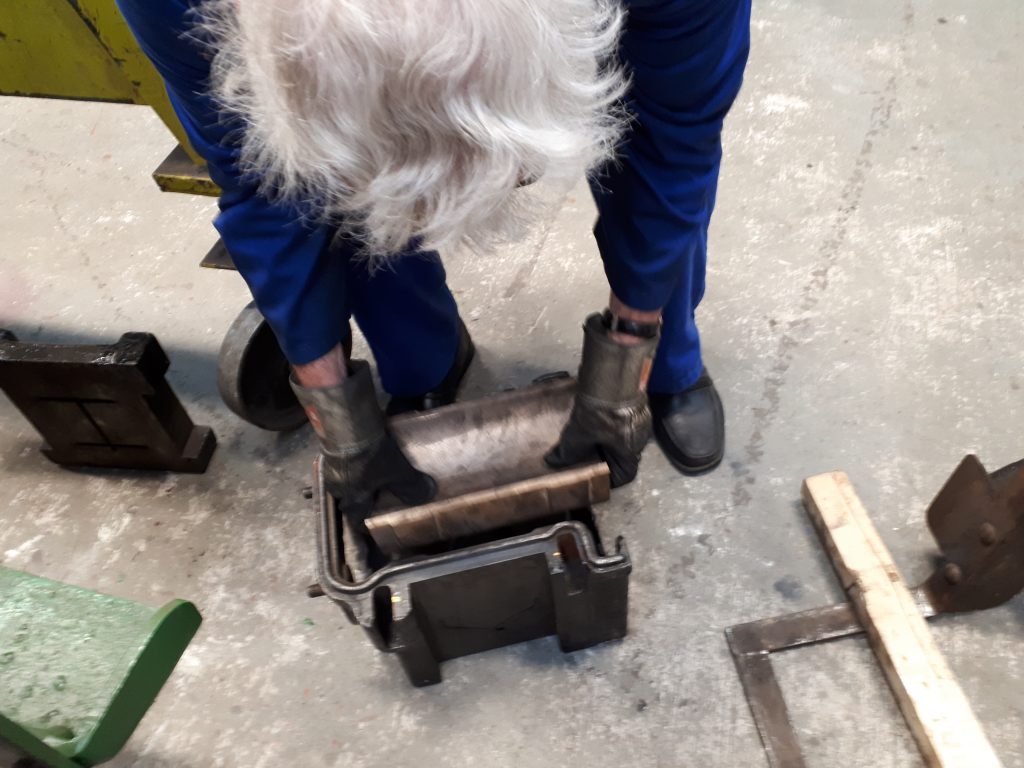 Bill Norcross has started the machining of the new axlebox brasses and completed the first successful fitting into an axlebox on Friday.
 A great deal of progress was made on both Wednesday and Friday with the thorough clean being given to Cumbria. Roger, Phil Bell, and John Dixon have concentrated their efforts on the frames, motion and brake rigging whilst John Davis worked on the wheels.
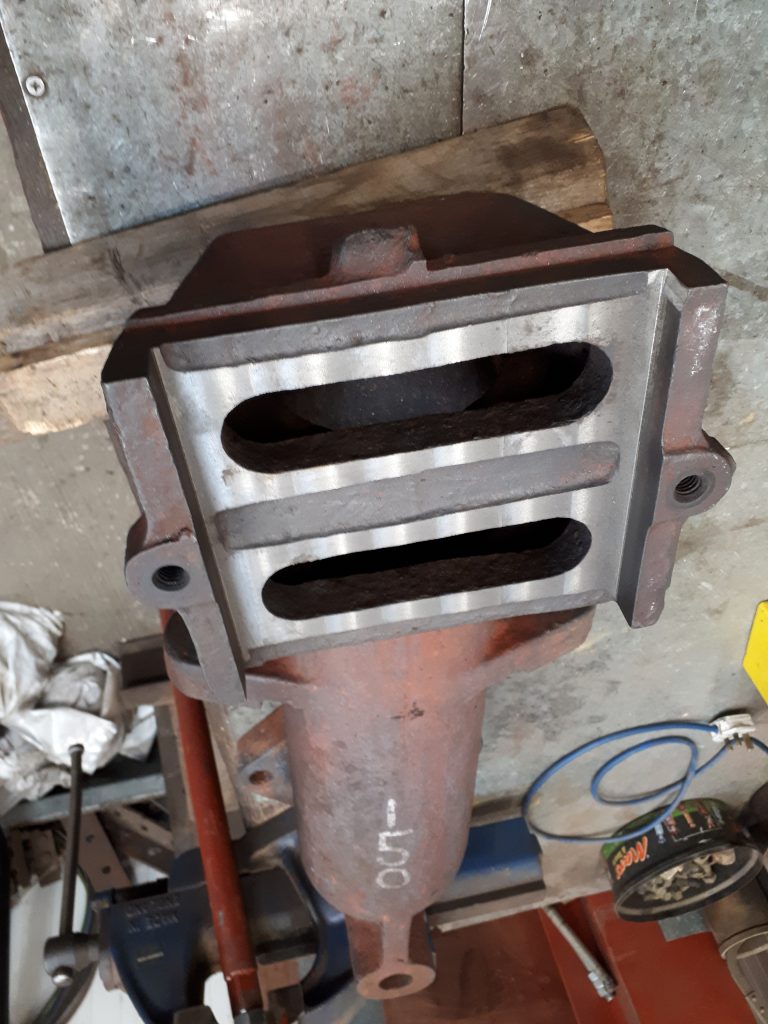 Matt Jervis had successfully removed the ‘J’ pipe from the boiler which was subsequently machined by Bill Norcross.
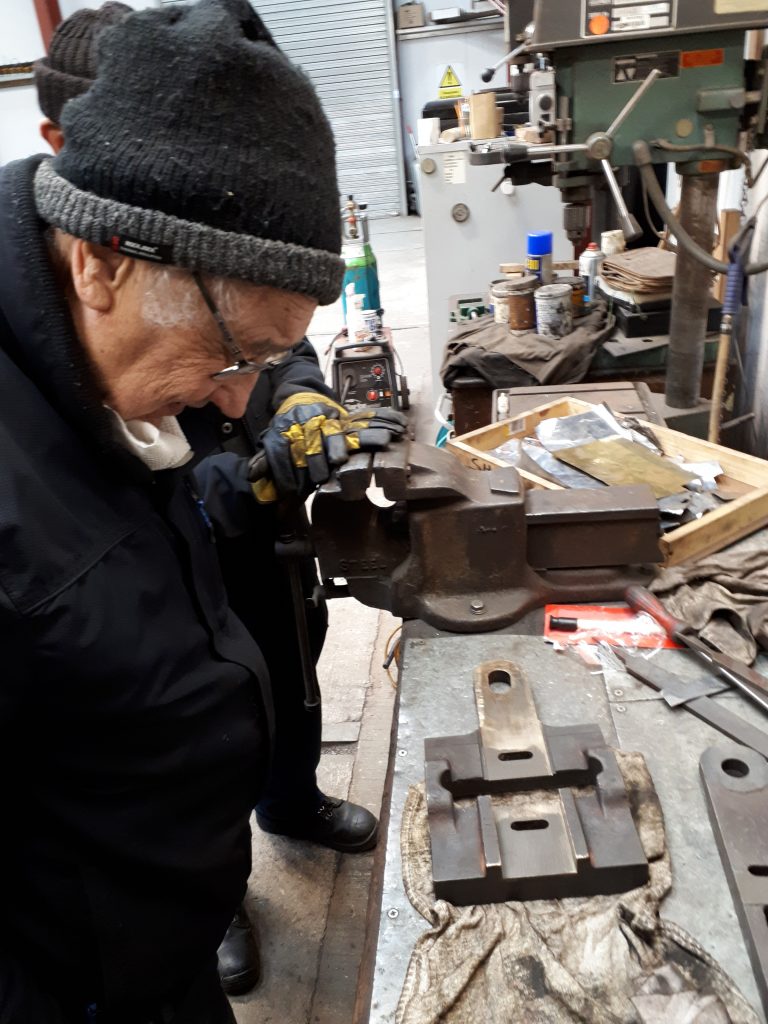 Bob and Tim spent all their time on Friday (strictly limited number of tea breaks!) in their efforts to produce flat polished surfaces on both the regulator valve and ‘J’ pipe faces. Keith had kindly manufactured a flat steel plate to size with which to apply the carborundum paste although one or two high spots on the cast iron ‘J’ pipe needed some rather more aggressive attention! The task is still quite a way from completion and more work is planned for this next week.
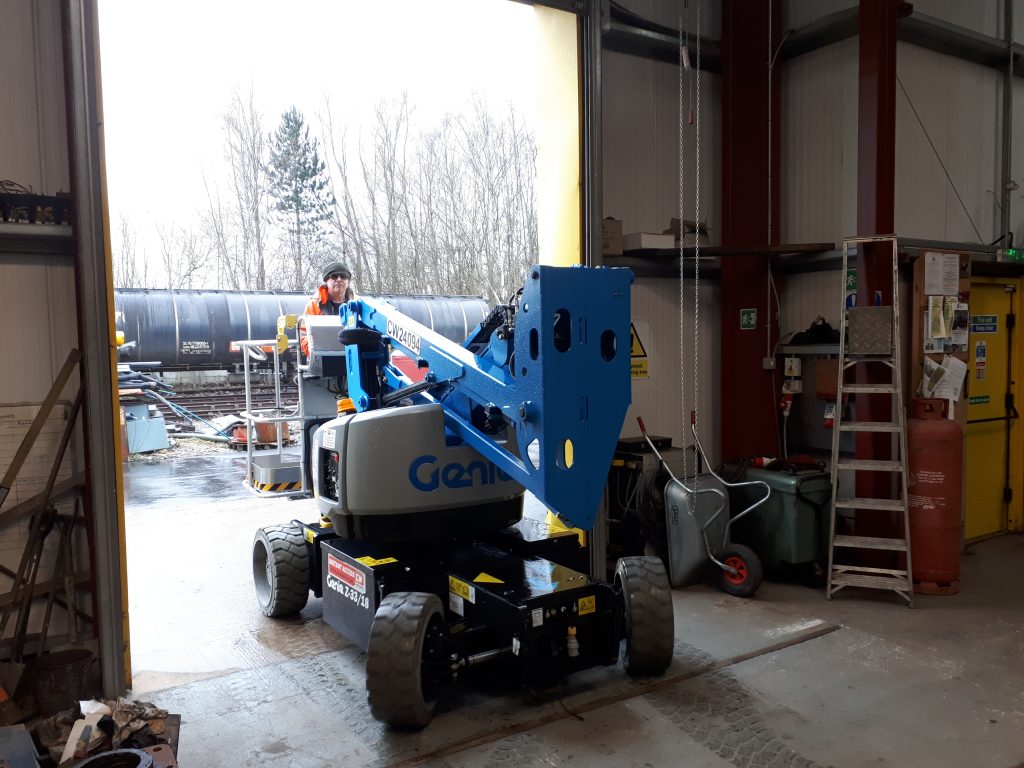 A major project completed has been the installation of the new overhead safety wire system on road three of both the heated and unheated sections of the FRT shed. Wednesday, 20th February was spent on moving various pieces of equipment out of the way and taking delivery of a cherry picker and tower scaffold for use of the installers. That didn’t stop Adrian getting a few instructions on how to operate the cherry picker in order that it could be stowed away safely overnight.
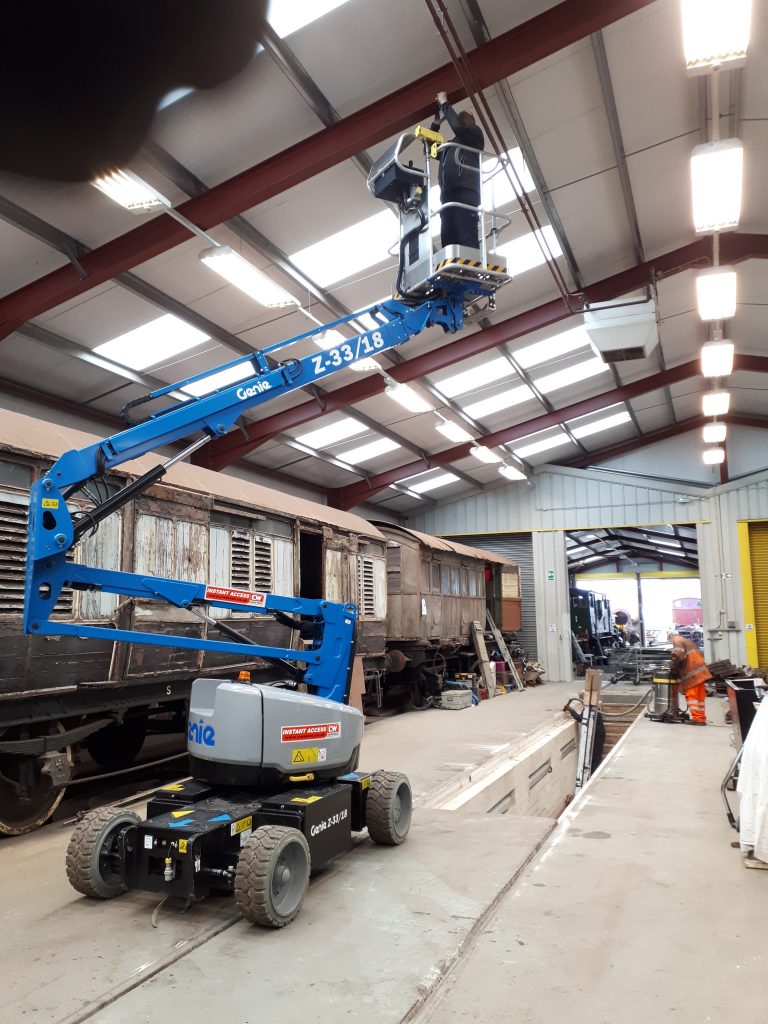 Fortunately, despite a short power outage, work progressed steadily during the day.
 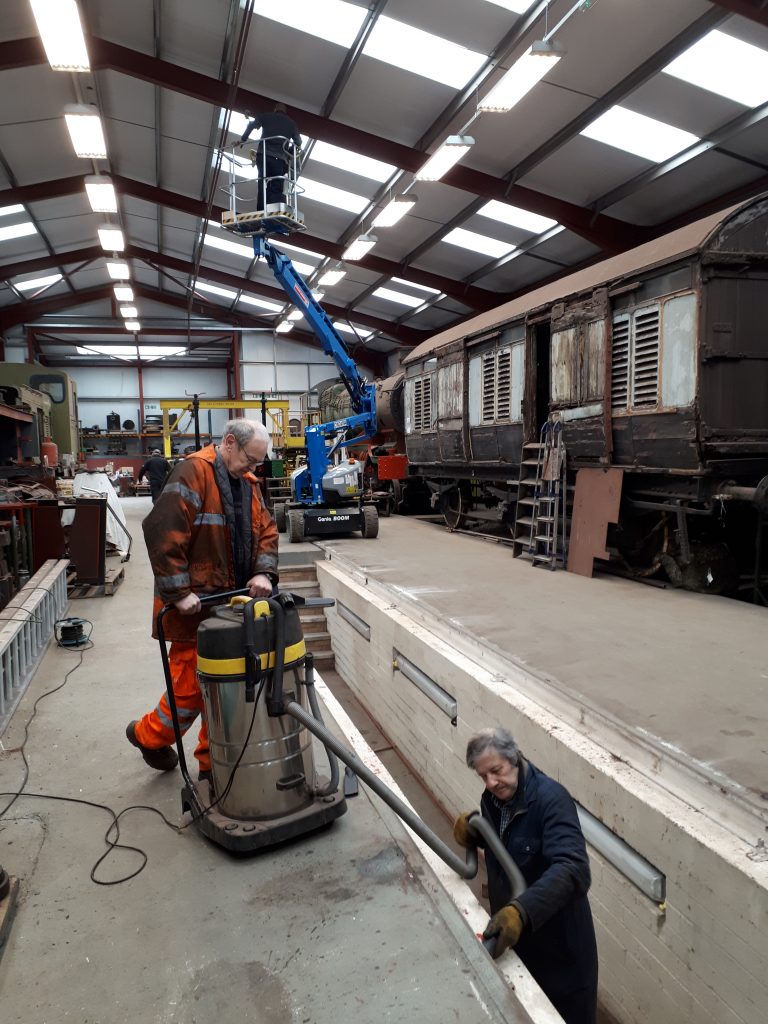 With the rolling stock now out of the way, the opportunity was also taken to undertake a thorough clean of the central section of the shed including the pit.
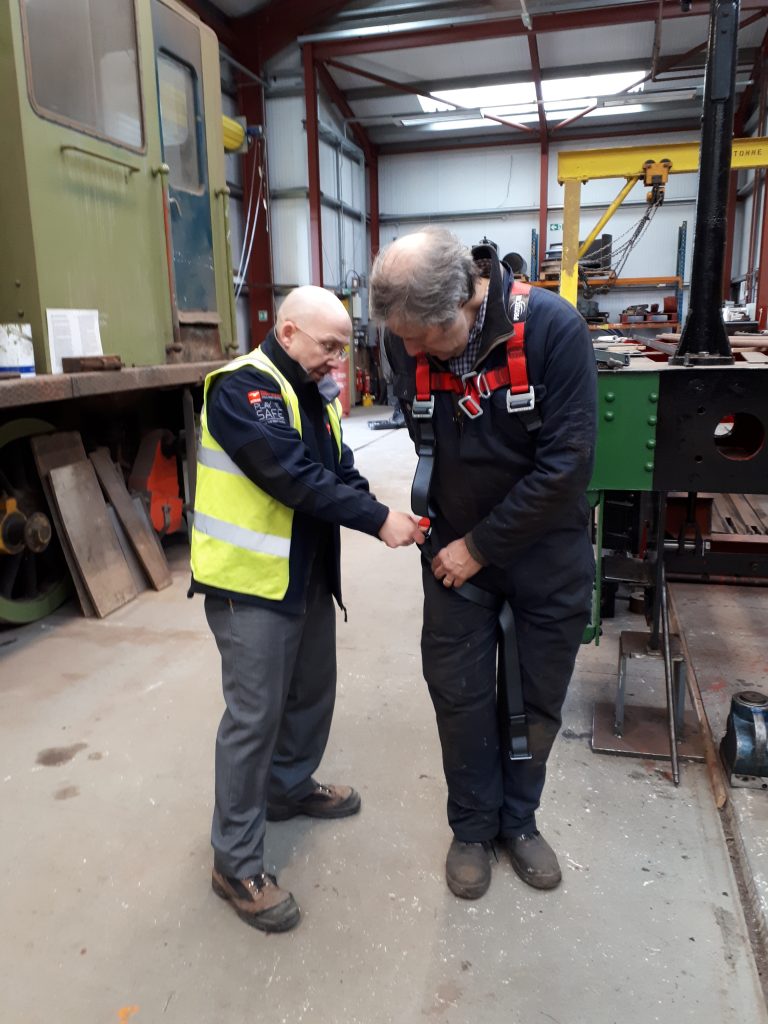 Mike Rigg volunteered to try on one of the new harnesses and is seen here getting rigged up (geddit?!) with the assistance of Joe Jackson from Trad Safety Systems.
 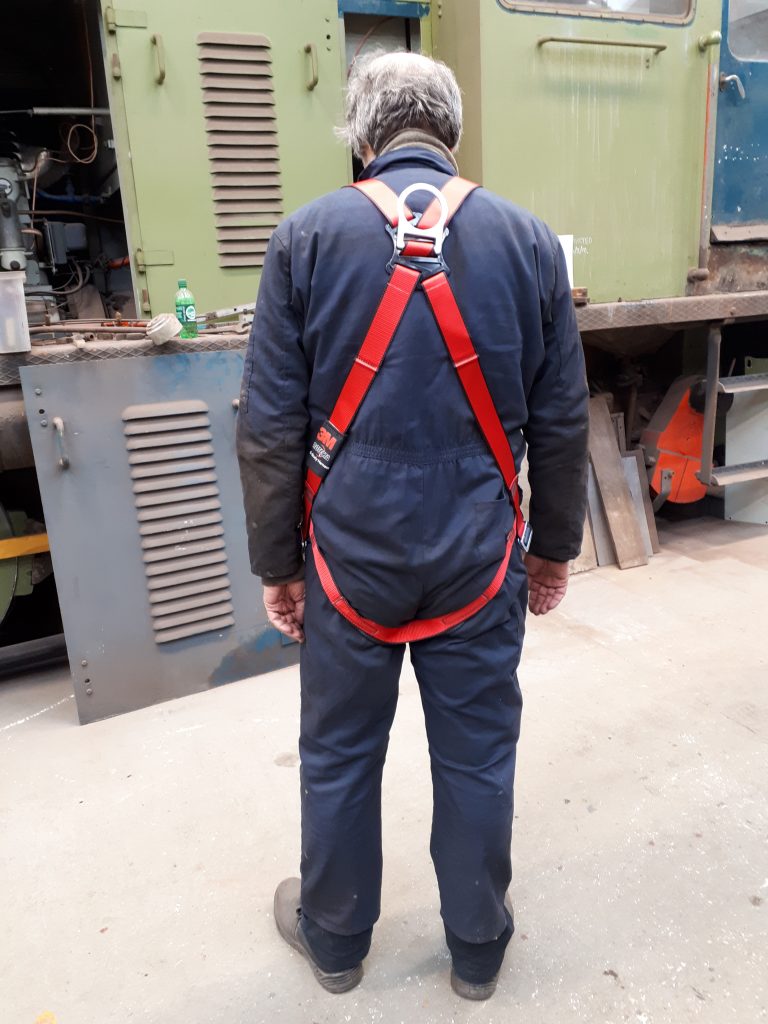 A rear view of Mike shows the correct position, between the shoulder blades, for the metal loop to which the back strap should be attached. The installers finished a little later than planned, but all the rolling stock was back in the shed by 17.30 and Stanlow moved back home to the main running shed. A full operating instruction for the overhead safety wire system has been written and is available both in the mess room and in the harness storage drawer in the shed filing cabinet.
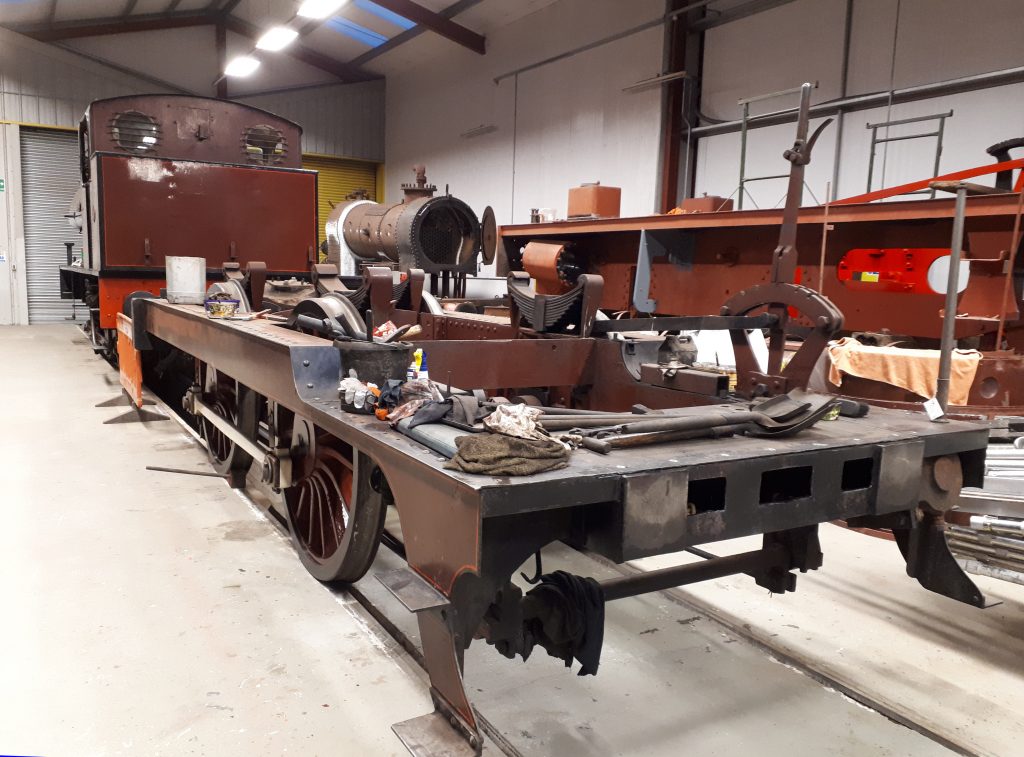 One side benefit from the upheaval in the shed was the opportunity to re-marshal the rolling stock so that Cumbria and FR 20 could be positioned over the pit to assist maintenance and repairs.
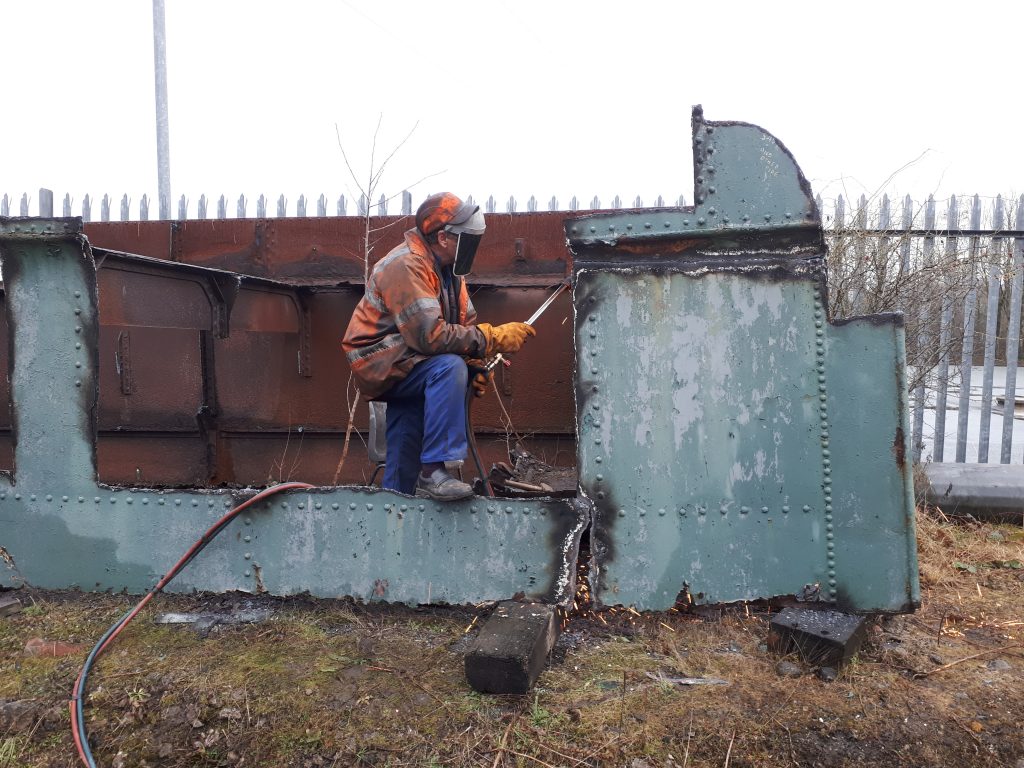 Outside, Keith has been busy on repairs to the newly acquired tender tank for Wootton Hall and also in cutting up the original which, unfortunately, was well past being repaired. Alan has been loosening nuts with a view to removing FR 20’s valve chest cover and Adrian has been undercoating Caliban‘s frames. Work on Fluff progresses as well.
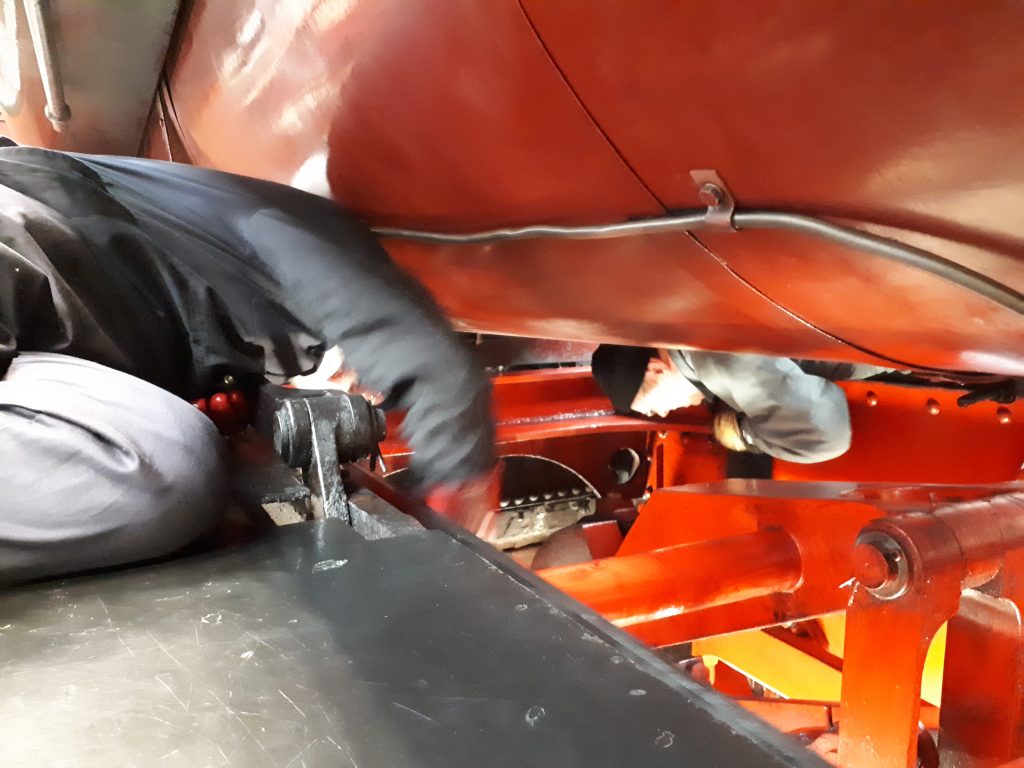
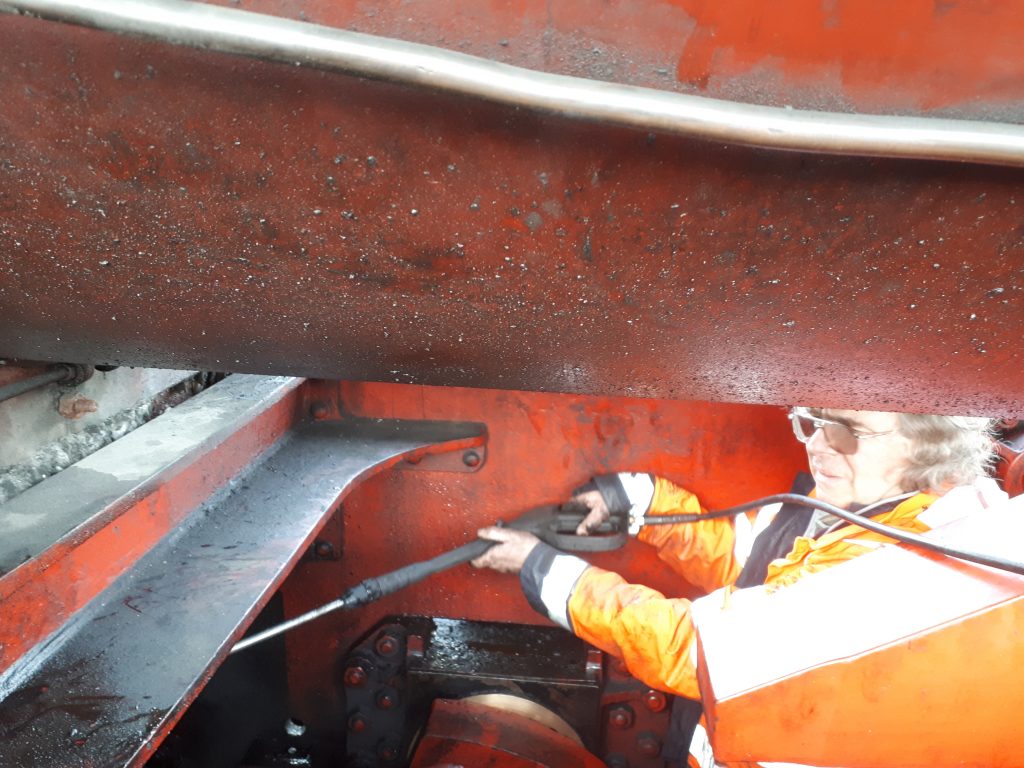 Ade is pictured here under the frames with the lance.
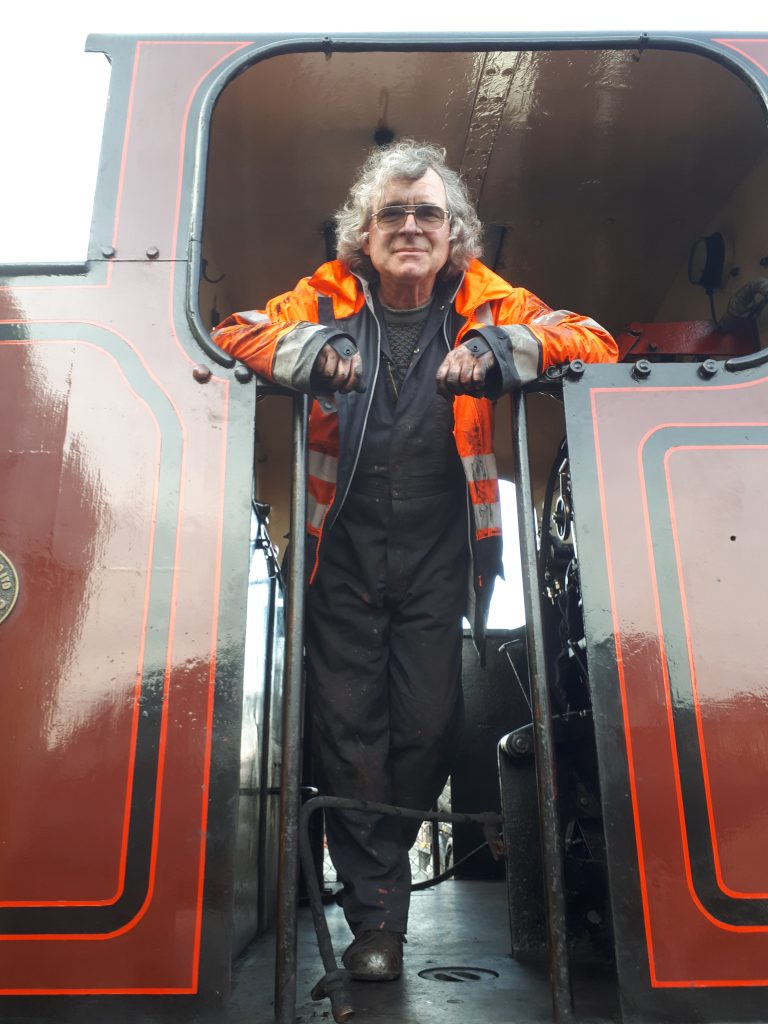 Ade also received some driving instruction on Sentinel diesels and is seen here about Cumbria ready to do the shunt at the end of the washout.
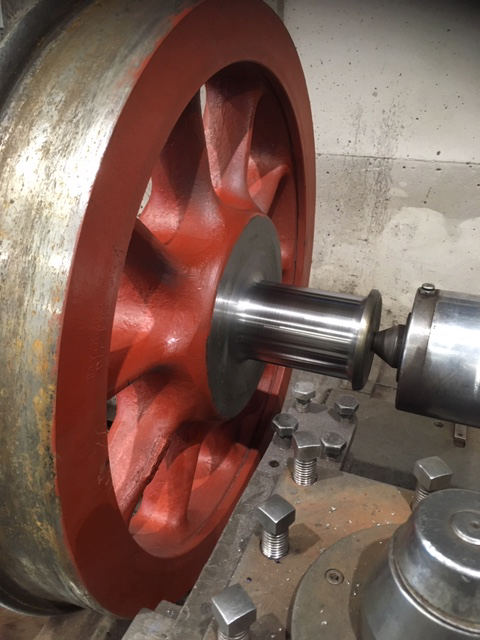 Jeff Nixon at CMS Cepcor managed to find a slot on Thursday to undertake the skimming of the journals on FR 20’s tender wheelsets. He kindly sent us
 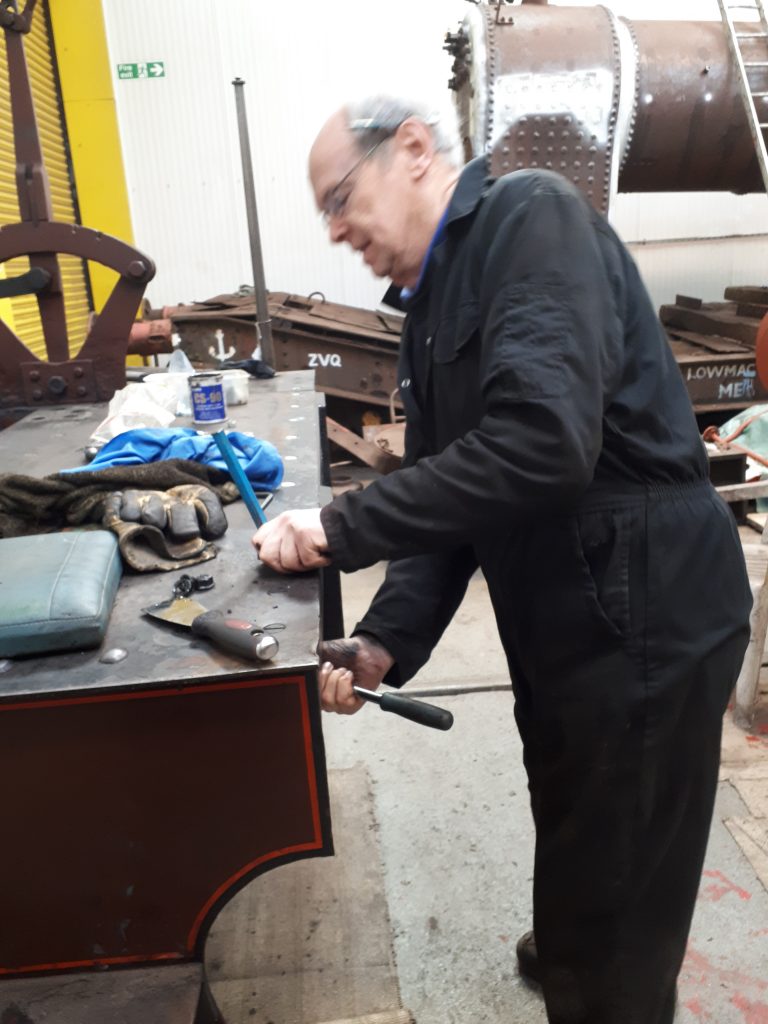 After having gloss painted FR 20’s drag box and underside of the cab floor on Wednesday, John then bolted down the floor on Friday.
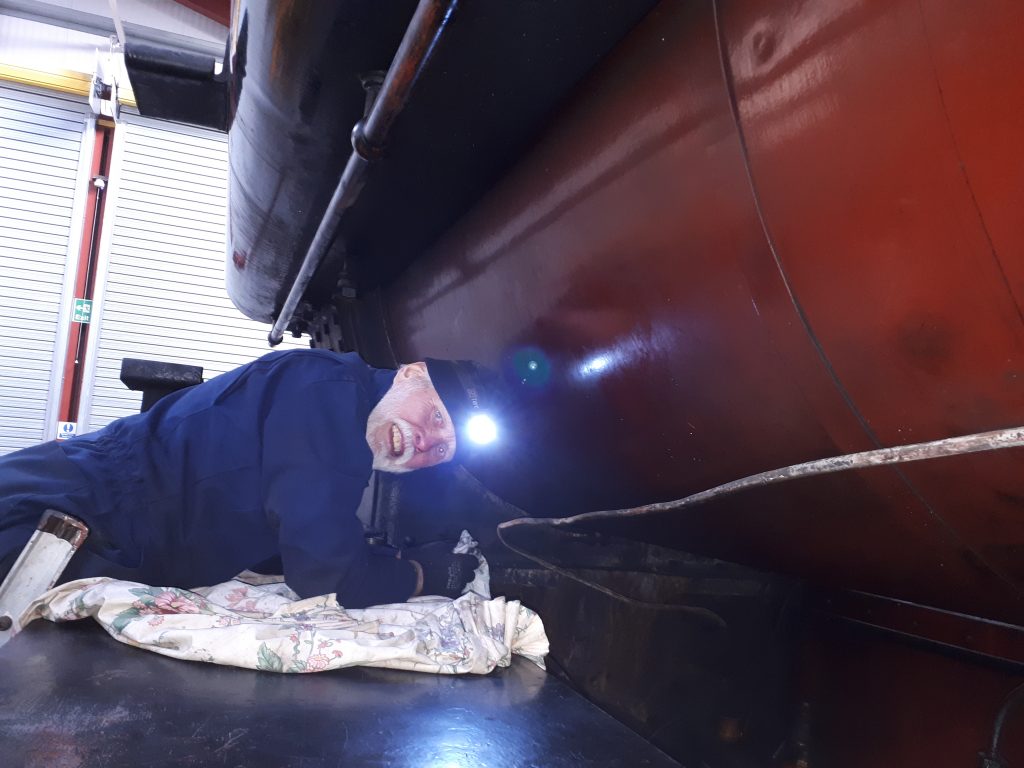 Roger kindly took on the task of cleaning Cumbria between the frames, making use of his head torch.
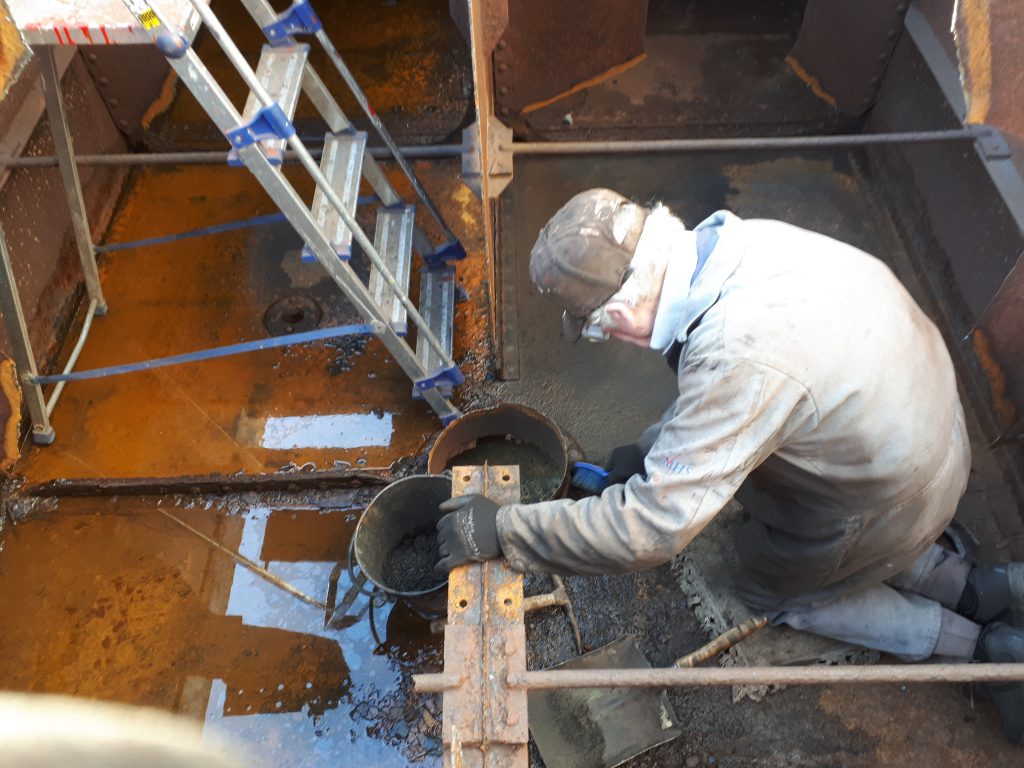 Bob was missing from Friday’s working party (too busy consulting his lawyer regarding scurrilous accusations in a previous blog?!), however Fred spent his time cleaning out scale from the floor of Wootton Hall‘s tender tank.
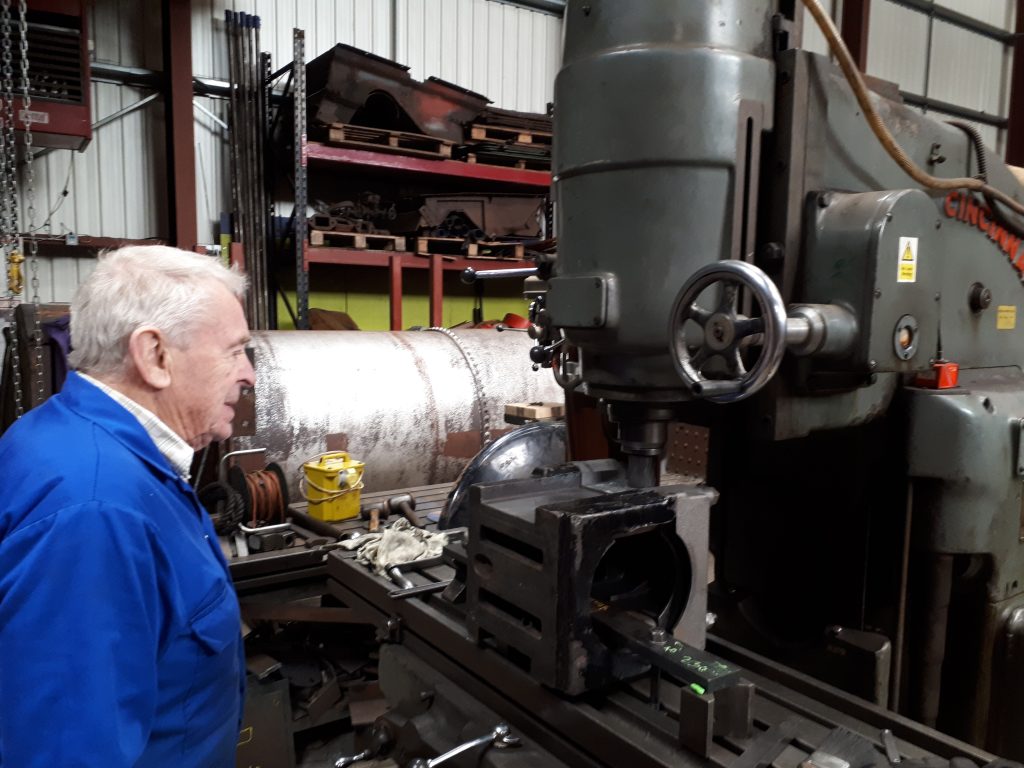 Bill Norcross has been busy machining the new underkeeps for Wootton Hall‘s tender axleboxes.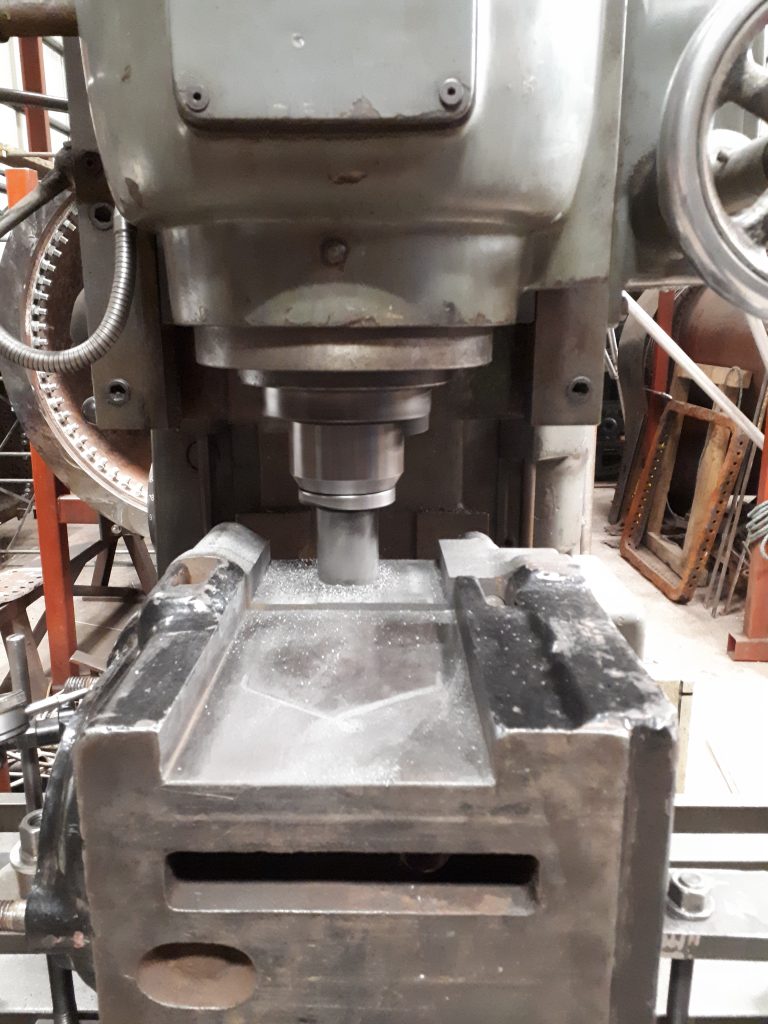
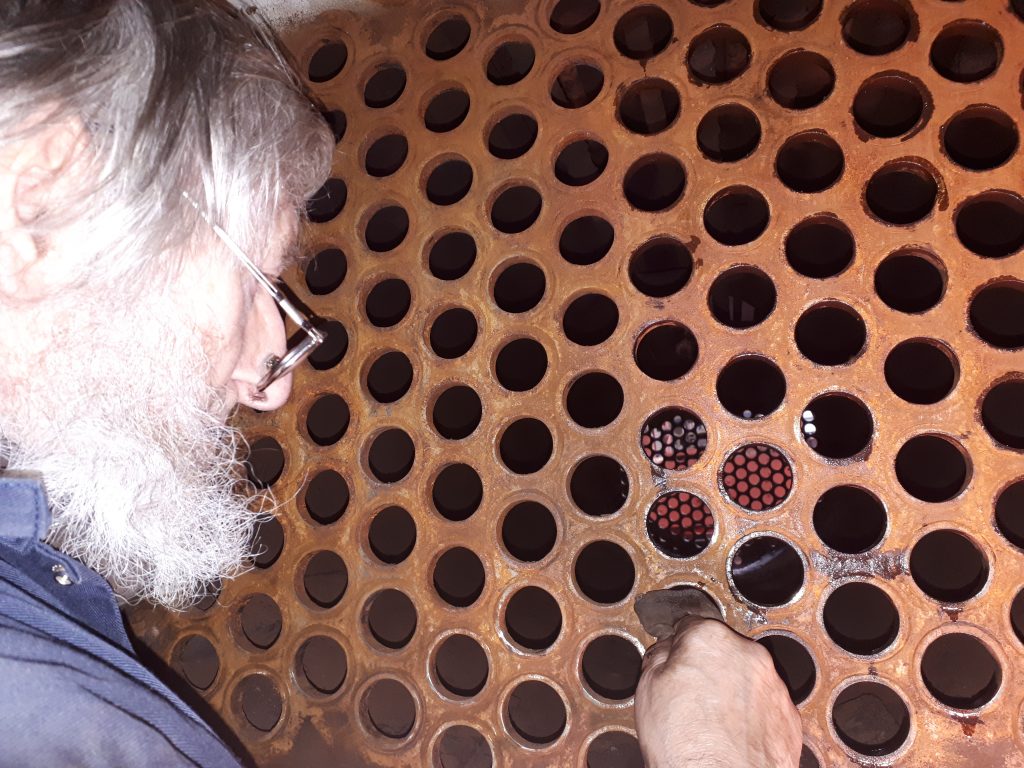 After Alan had inspected and cleaned the tubeholes on FR 20’s boiler, Friday afternoon was spent loading the new tubes into place. A supply chain was set up to hand over the tubes to Tim and John Dixon, who placed them into the boiler and applied suitable force where necessary. Meanwhile Alan spent his time in the firebox guiding the tubes into the correct hole and shouting suitable forms of encouragement to those loading the tubes. All in all, a very busy couple of hours!
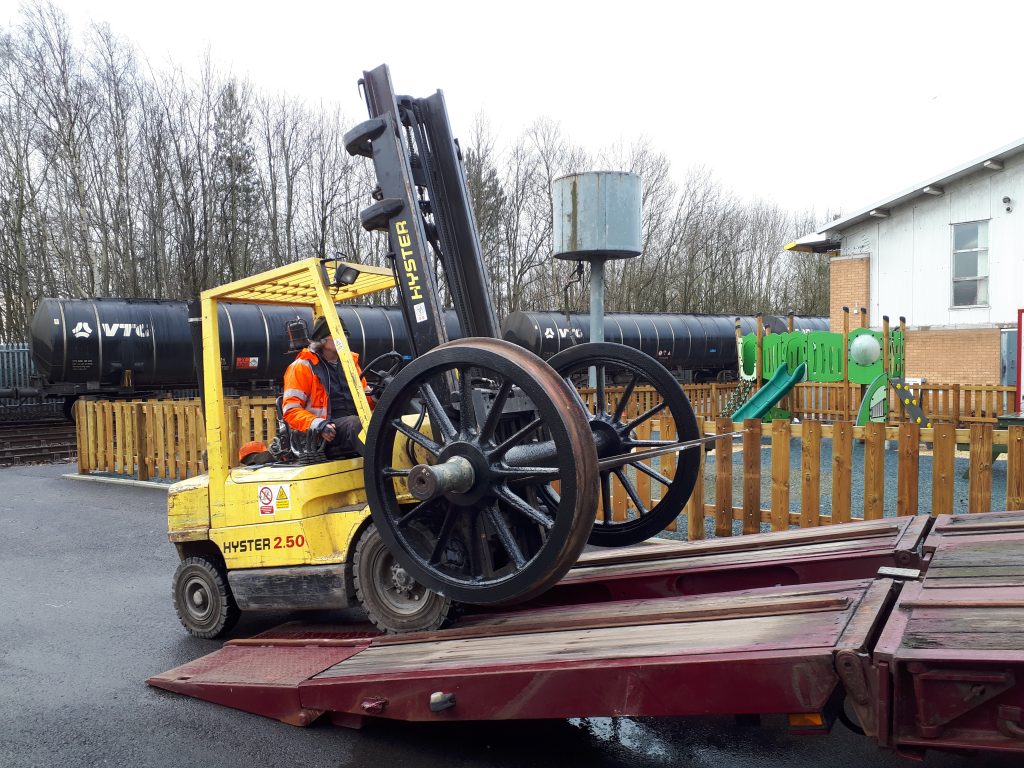 Wednesday started early with members on site in good time to enable prompt loading of seven wheelsets when the low loader arrived. Just for the record there were three from Wootton Hall‘s tender, both Caliban‘s wheelsets and FR 20’s tender wheelsets. These are expected back sometime next month after attention to tyres and/or journals. Adrian is seen here with the fork lift.
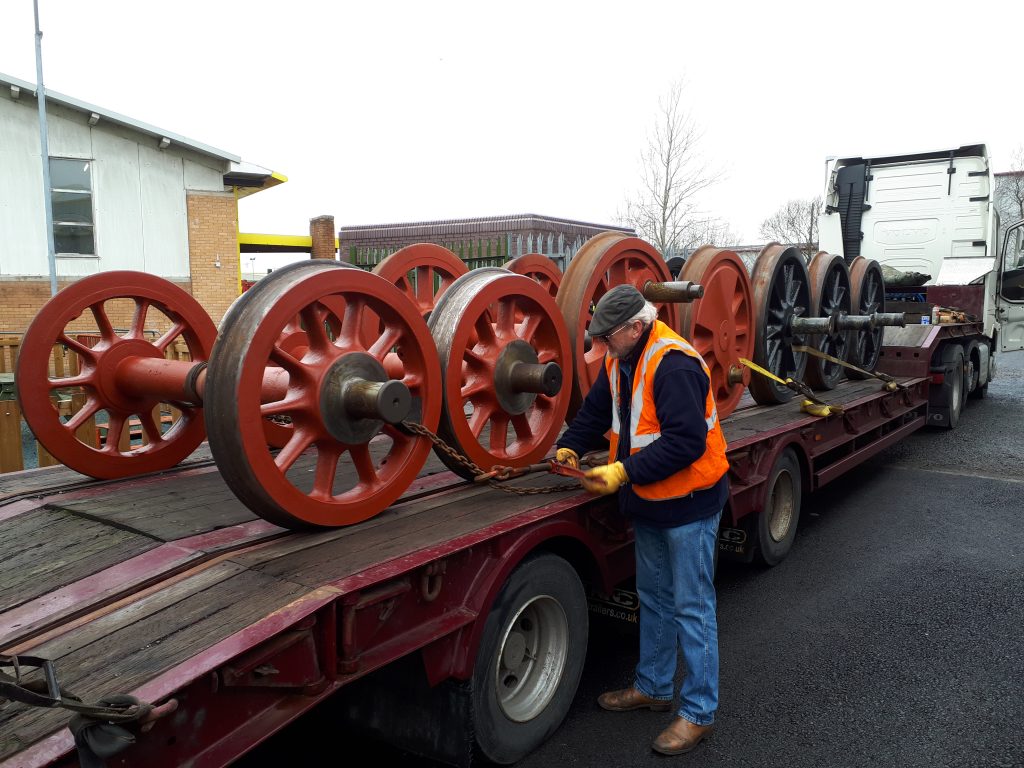 Martyn Soames straps the wheelsets to his rig.
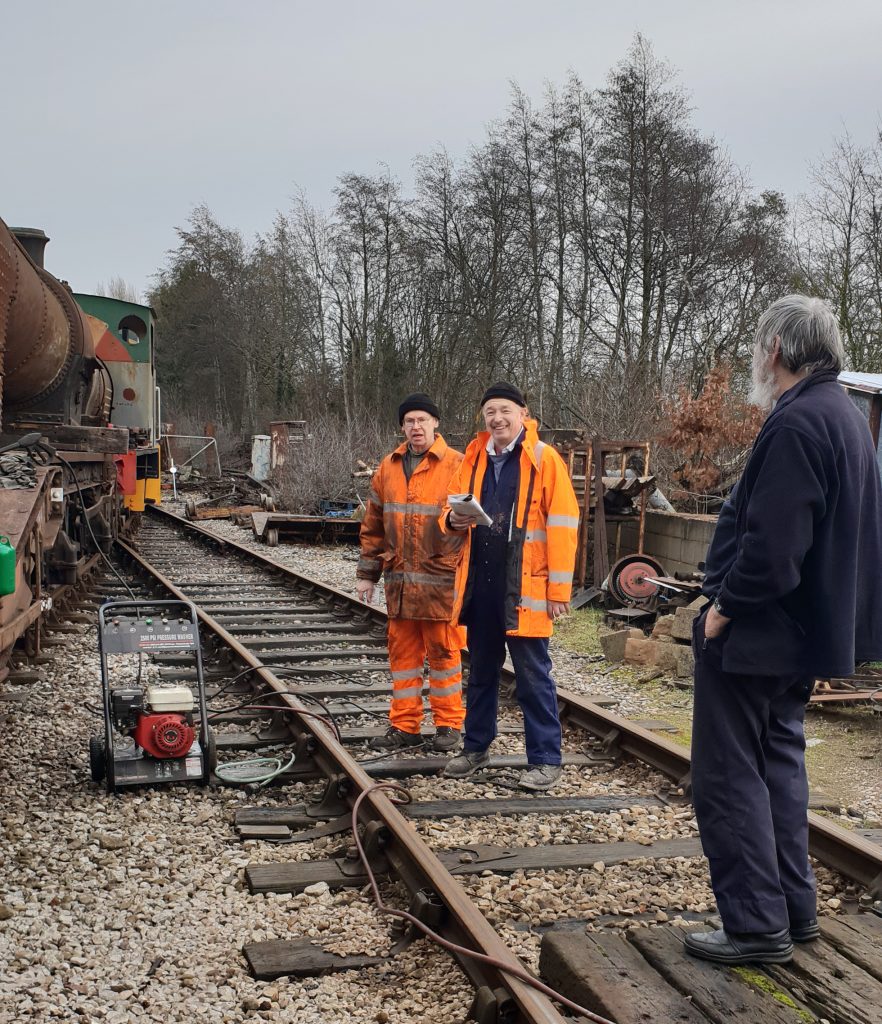 Alan and John watch on here as Tim takes the drastic step of inspecting the instructions for the water pump in the hope that it might be coaxed into life.
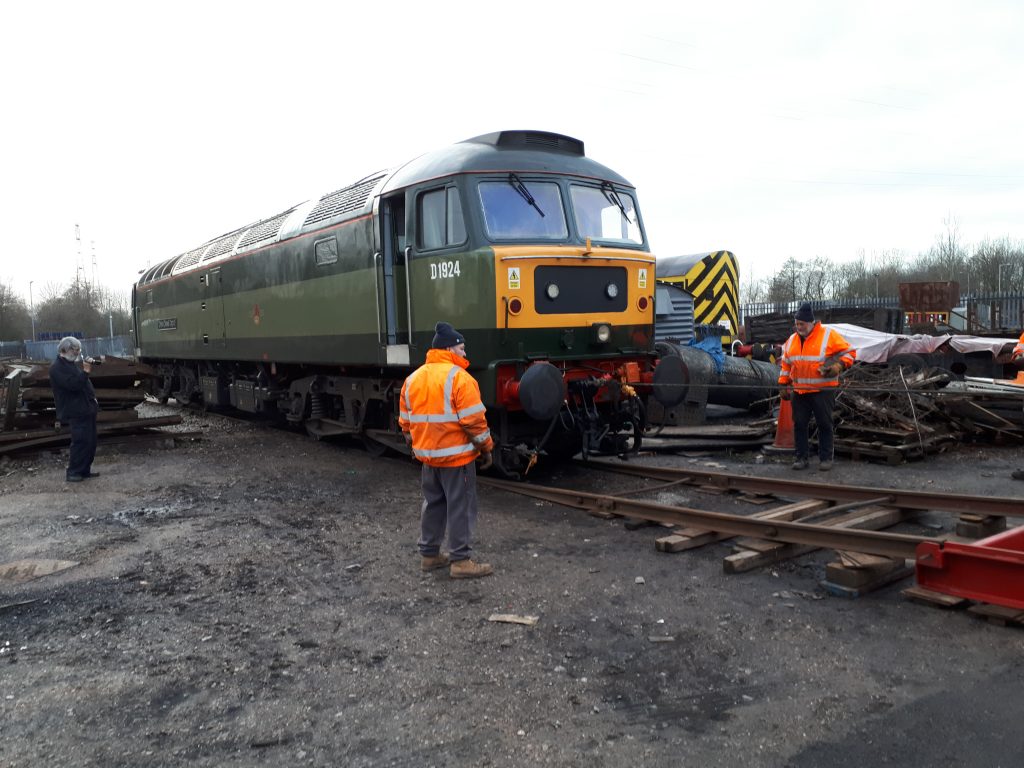 The rest of Wednesday was spent watching Crewe’s Class 47 D1924 being winched on to a massive trailer for trip back to its home depot. The loco had taken refuge at the RSR the previous Thursday after suffering a problem which prevented any longer distance movement by rail. We trust that D1924 will soon be back in good health.
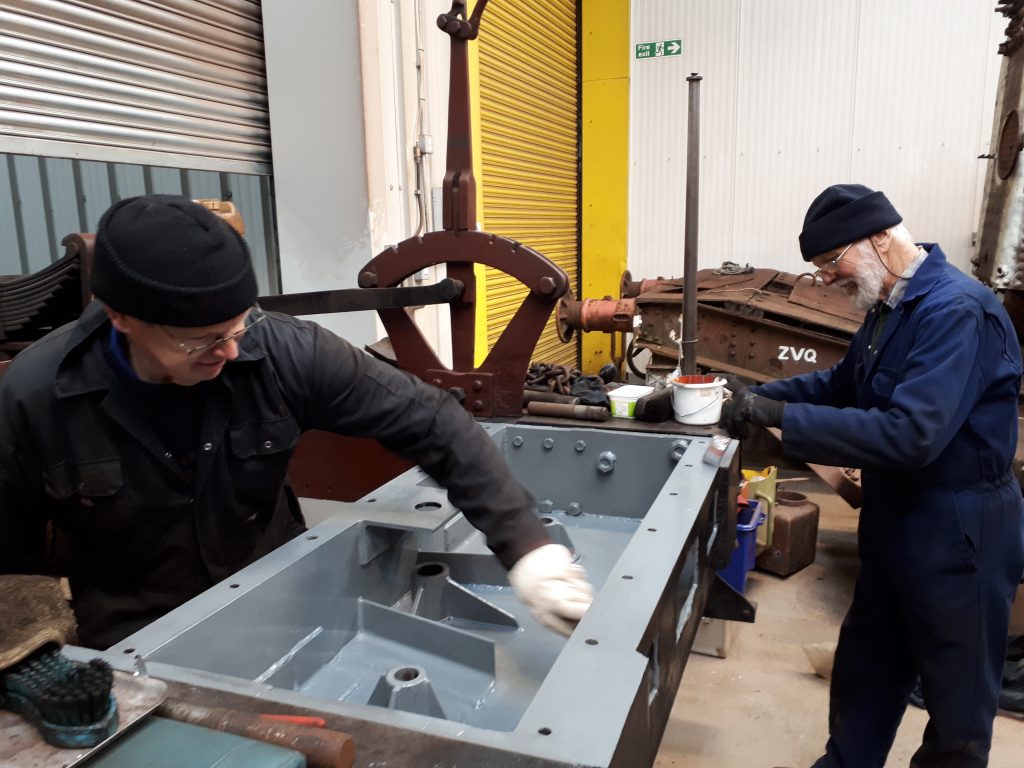 On Friday John Dixon and Roger continued their work on FR 20’s drag box, attending to the securing holes on the footplate and applying a coat of undercoat.
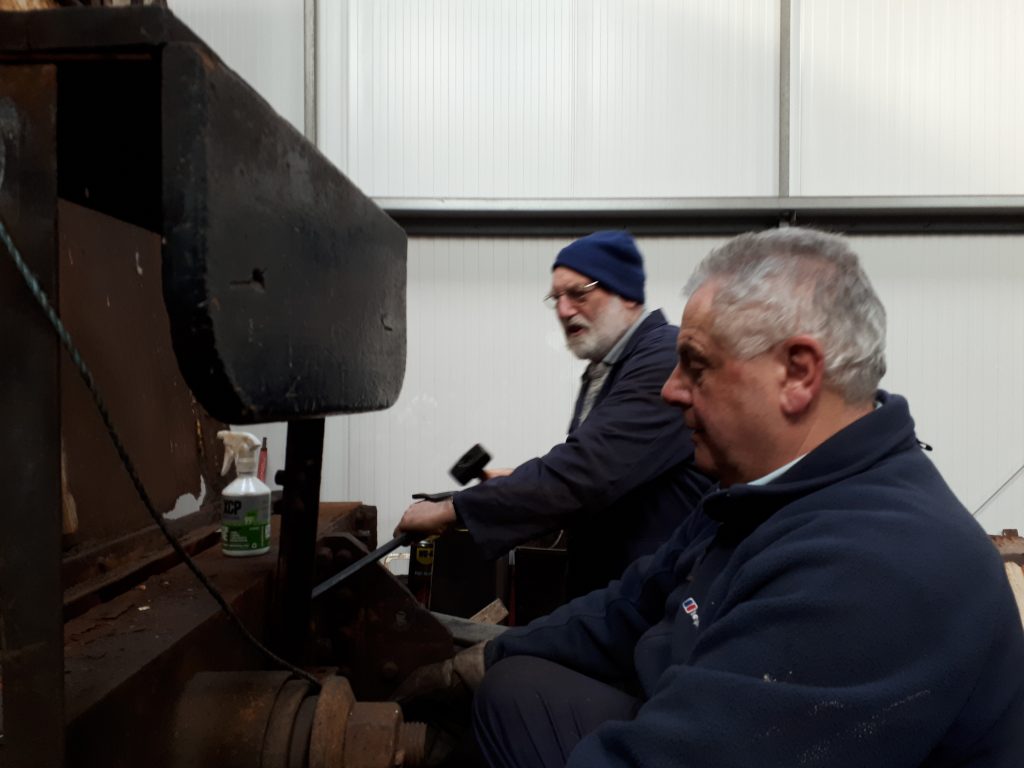 Matt Jervis made a start on removing Cumbria‘s regulator (borrowed from 3793) and ‘J’ pipe whilst Fred continued to clean Caliban‘s buffers. Paul Newton continued his work on the former L&NWR platform seat and John Davis and new volunteer Phil Bell attended to the removal of Fluff‘s rear cab sheet.
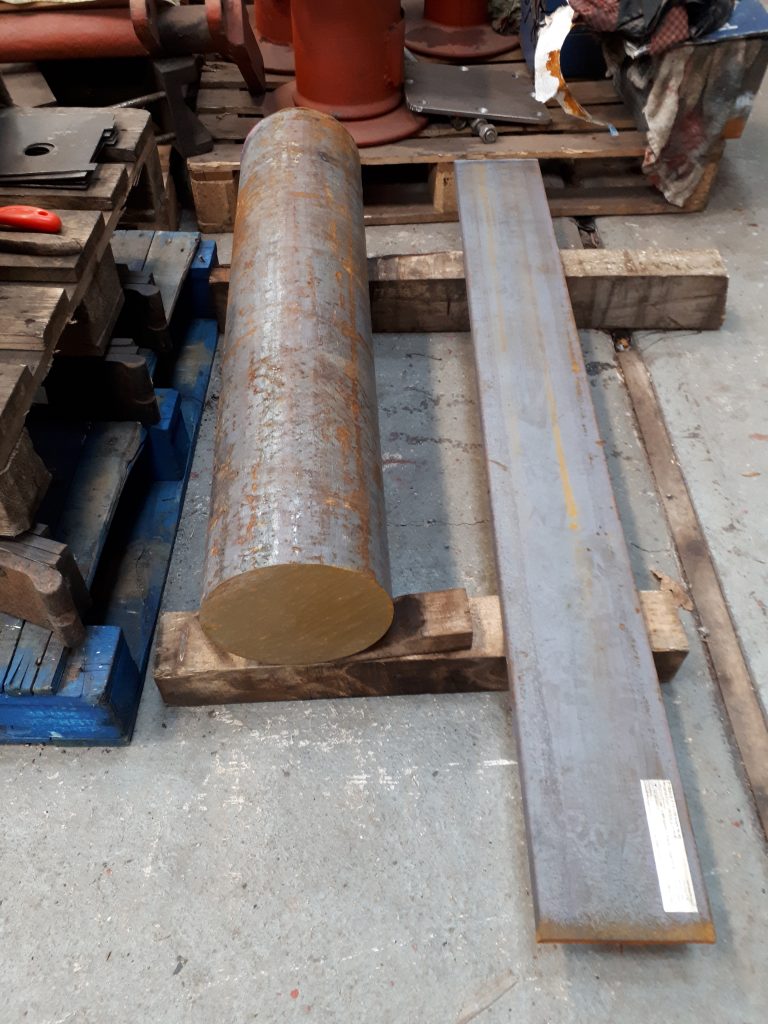 There has been more progress on Wootton Hall with the arrival of new steel for the construction of the reverser – no, that round thing isn’t a log!
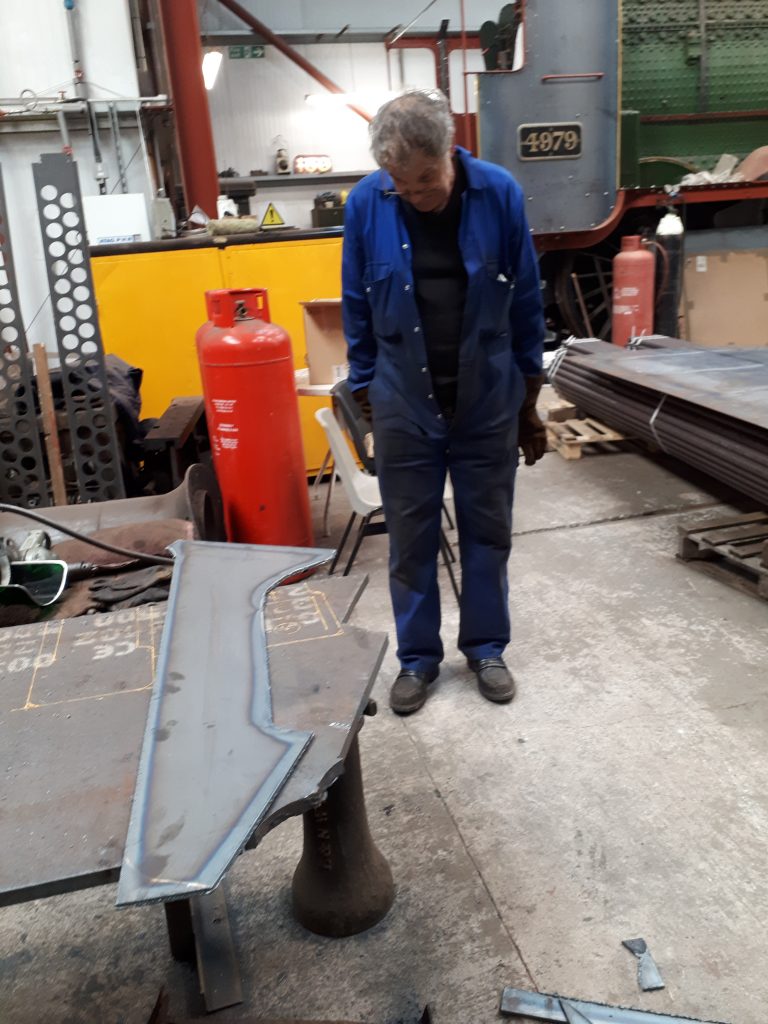 Keith has started the job of making up pipework for the injectors and is seen here with a newly cut corner stay for the recently purchased tender tank.
 We conclude with the sad task of recording the death last Thursday evening of former Live Steam band member Stuart Bennett. Stuart had, in the 1970s, been a member of popular South Lakeland folk group Bag ‘O Rags, which had entertained members on many occasions during those folk revival days. They were legendary occasions which brought many of our members together and the tales are still retold of merry nights out at such hostelries as the White Hart at Bouth and the Swan at Urswick. In 1999, after a period of time away from the folk music scene, Stuart accepted an invitation to join Live Steam and brought a new dimension to the band with his vocals, harmonies, guitar instrumentation and contributions to musical arrangements. Stuart clocked up over 140 gigs with the group, including the recording in 2001 of the CD Silver Jubilee, before reluctantly having to retire through ill health in 2008. We had many, many good times together and we send our sincere condolences to Stuart’s wife, Carol, and his family.
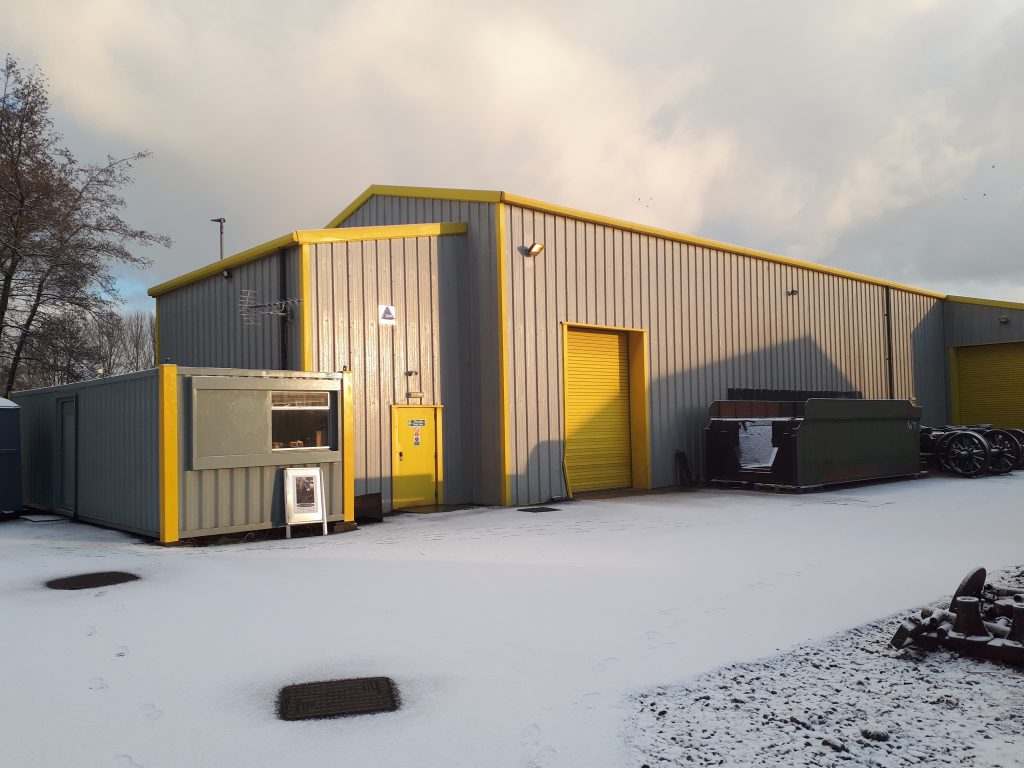 It was a very snowy Preston last Wednesday which probably explains why there was a delay to some of our members arriving. It was soon concluded that it was again too cold to undertake a washout on FR 20’s boiler.
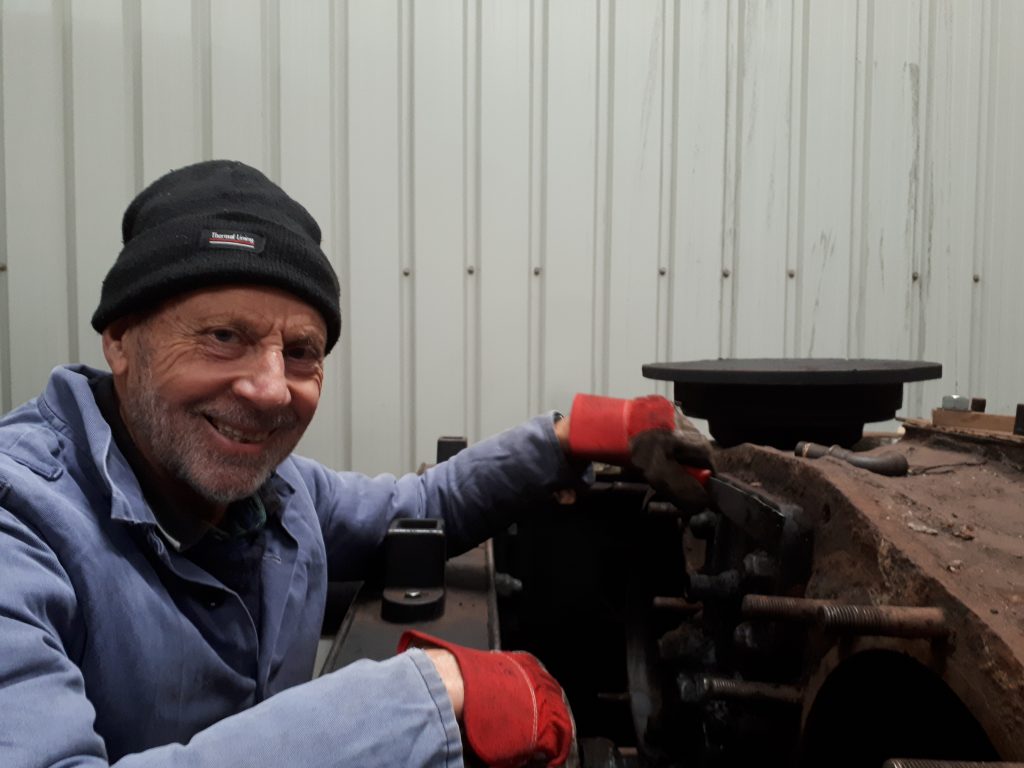 There were still plenty of other jobs to undertake in the comparative warmth of the shed so Martin was put to good use after making that effort to come, and is seen here cleaning the accumulated dirt and oil from around the front of FR 20’s cylinders and valve chest.
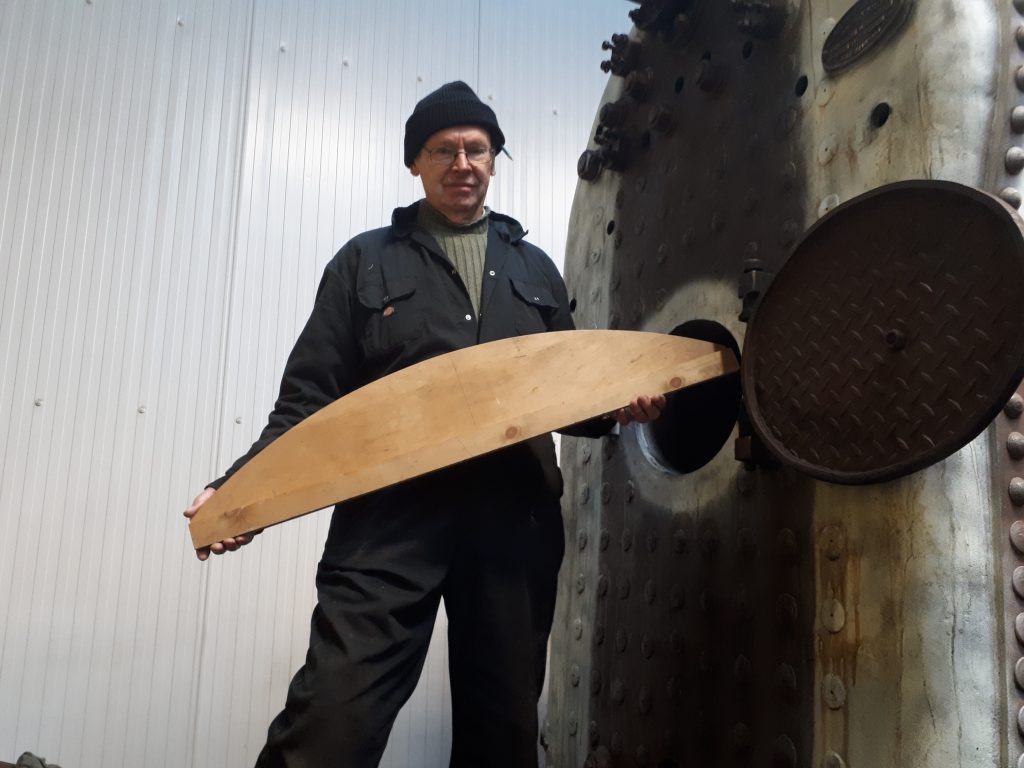 John Dixon test fitted a former for the future construction of a brick arch in FR 20’s firebox and Tim continued the task of cleaning and painting FR 20’s wheels.
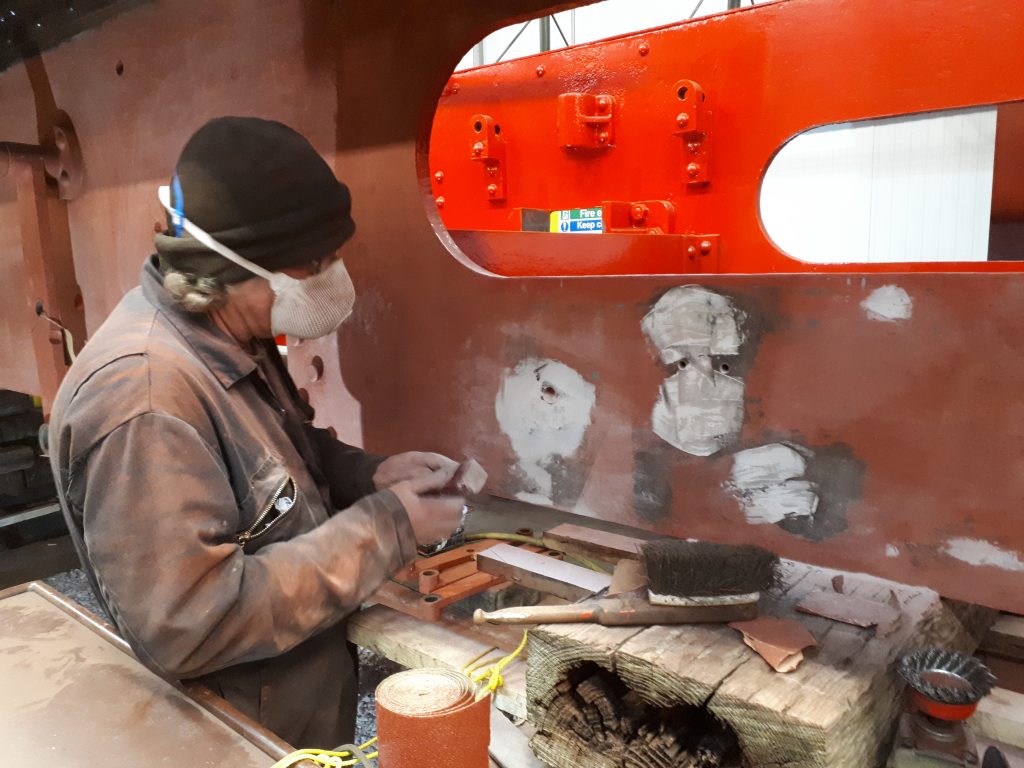 Ade continued his laudable work on Caliban‘s frames by filling and sanding various indentations.
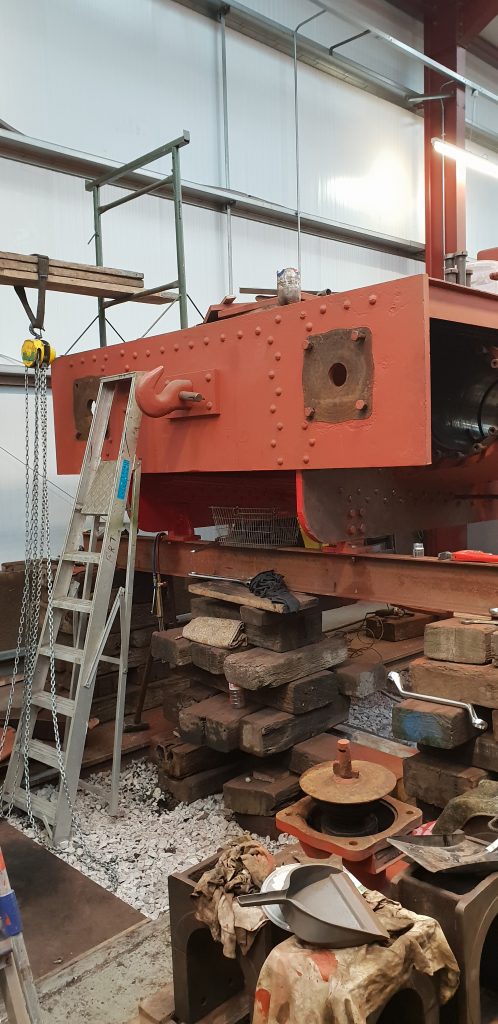 The cold weather put paid to any thoughts of undertaking a washout on FR 20’s boiler on Wednesday and so efforts were turned to removing Caliban‘s front buffers in readiness for the cylinders to be re-bored.
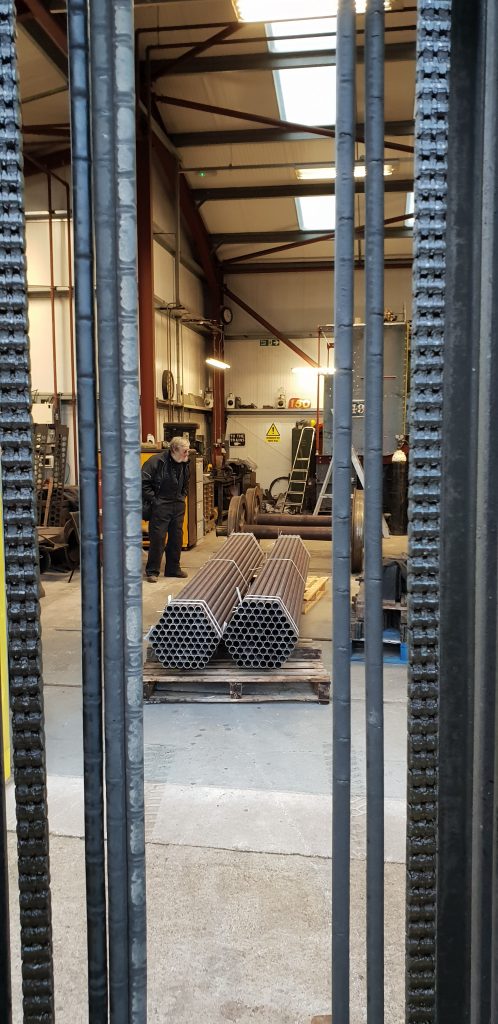 The new tubes for FR 20’s boiler arrived late in the day and can be seen in this artistic photo taken by Ade of Alan inspecting the tubes viewed through the fork lift’s mechanism. (Suspect he just couldn’t be bothered to get off the fork lift! Ed.)
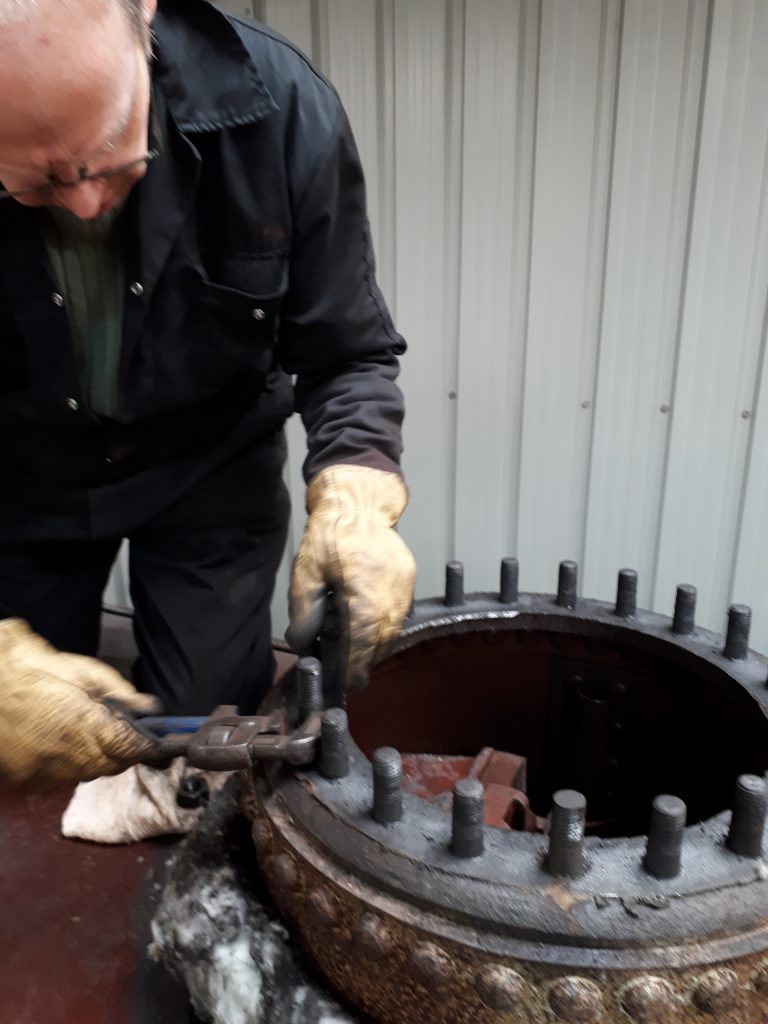 Cumbria‘s dome cover and dome lid were removed on Friday morning in readiness for the regulator and ‘J’ pipe to be removed for machining. John Dixon is seen here replacing one of the studs.
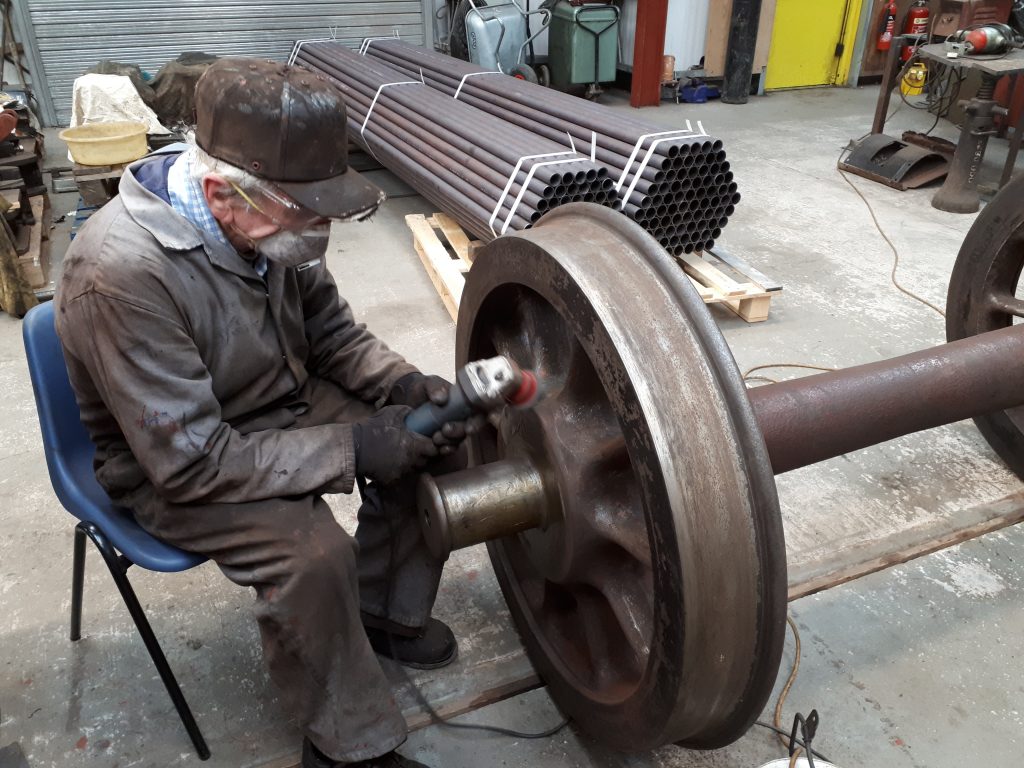 Fred spent much of the day finishing the cleaning up of FR 20’s tender wheels…
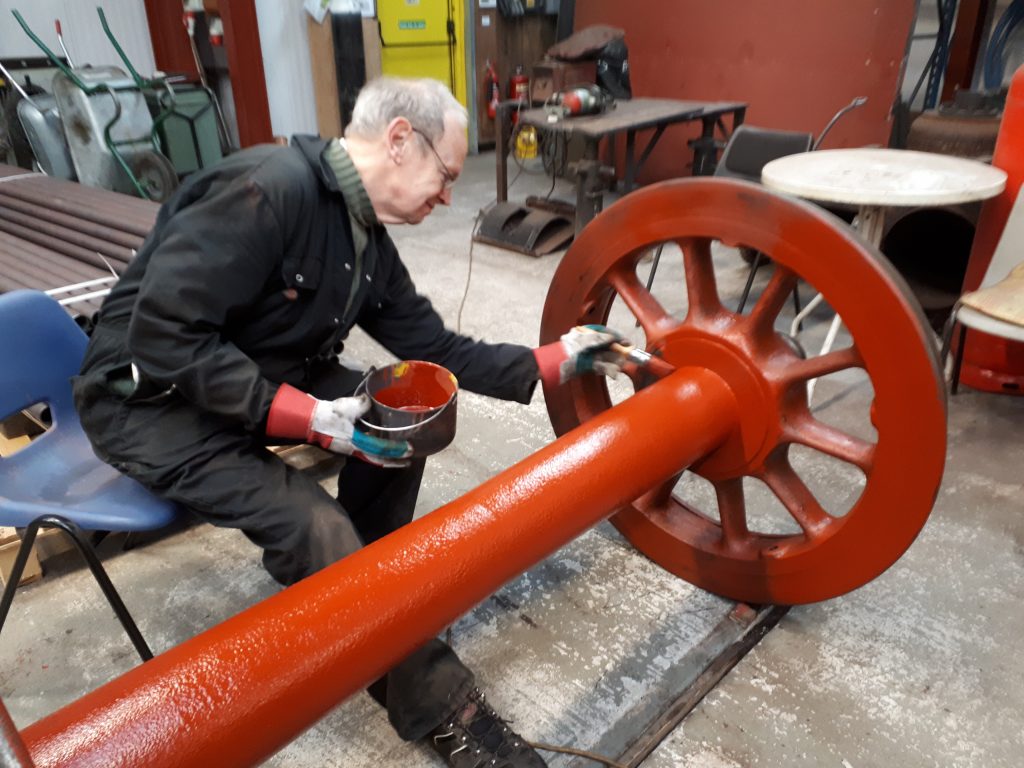 … then John Dixon applied a coat of red oxide paint.
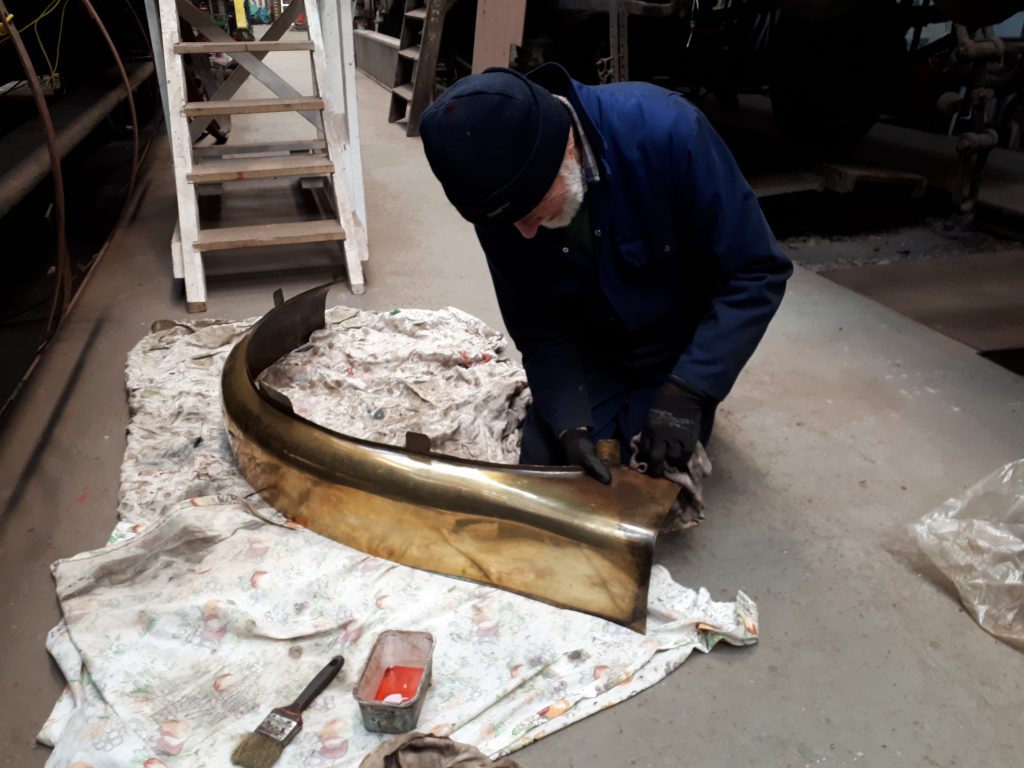 Roger continued Phil’s efforts at cleaning FR 20’s brasswork and can be seen here busy at his work.
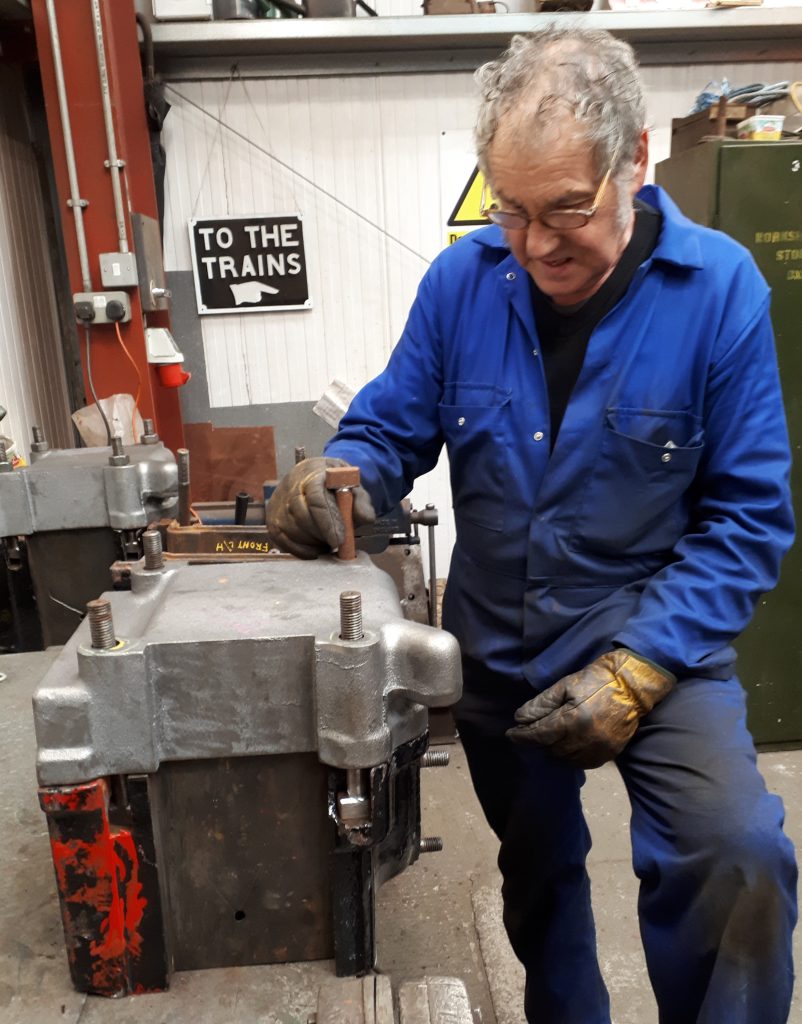 Keith has been working on the new keeps for Wootton Hall’s tender, and is seen here fitting one to one of the axleboxes.
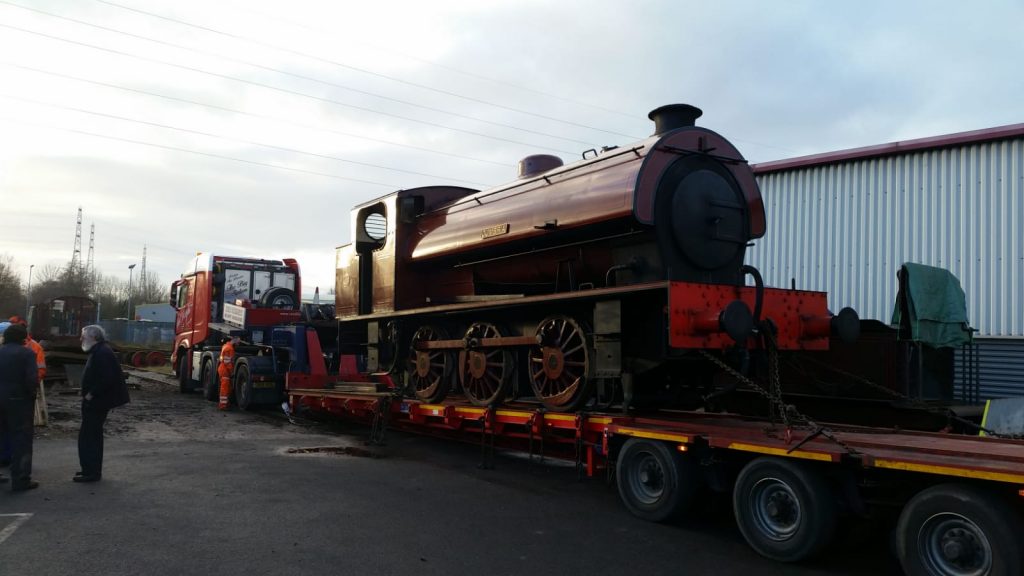 Firstly, as predicted, Cumbria arrived back at Preston last Monday and was tucked into the top of road three in the FRT shed ready for attention.
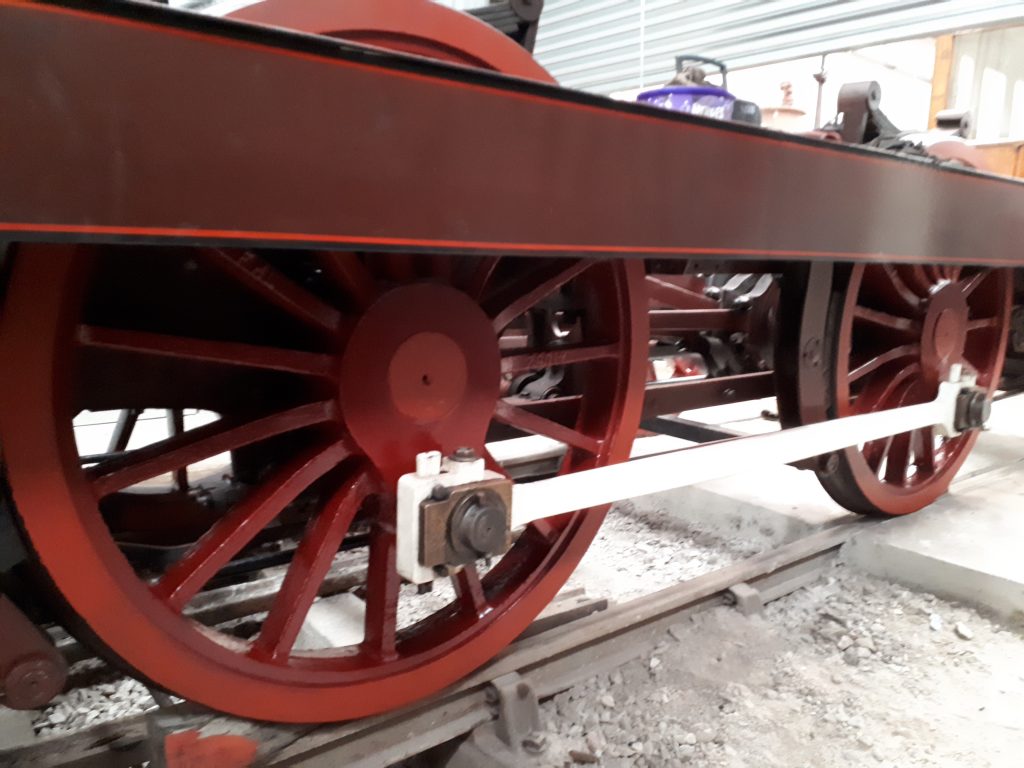 Work has continued on FR 20 with the first of the Indian Red gloss paint being applied to the engine’s wheelsets. This is literally a rolling programme as the engine will need to be rolled forwards or backwards for all areas of the wheels to be so decorated! All the copper pipework has been cleaned up ready for annealing to take place and further cleaning and polishing work has been carried out on the brass that fits to the front and back of the firebox. The steam cleaning of the tender wheelsets has been completed and they have been given a further hand clean in readiness for paint to be applied. Finally, new tubes have been ordered and a cheque despatched; the tubes should appear in the next couple of weeks. Meanwhile, with the all the old tubes now removed, a washout is planned for Wednesday, subject to a shunt being arranged and the pressure washer playing ball. With the formal NDT report now received, it should then be time to call in the boiler surveyor.
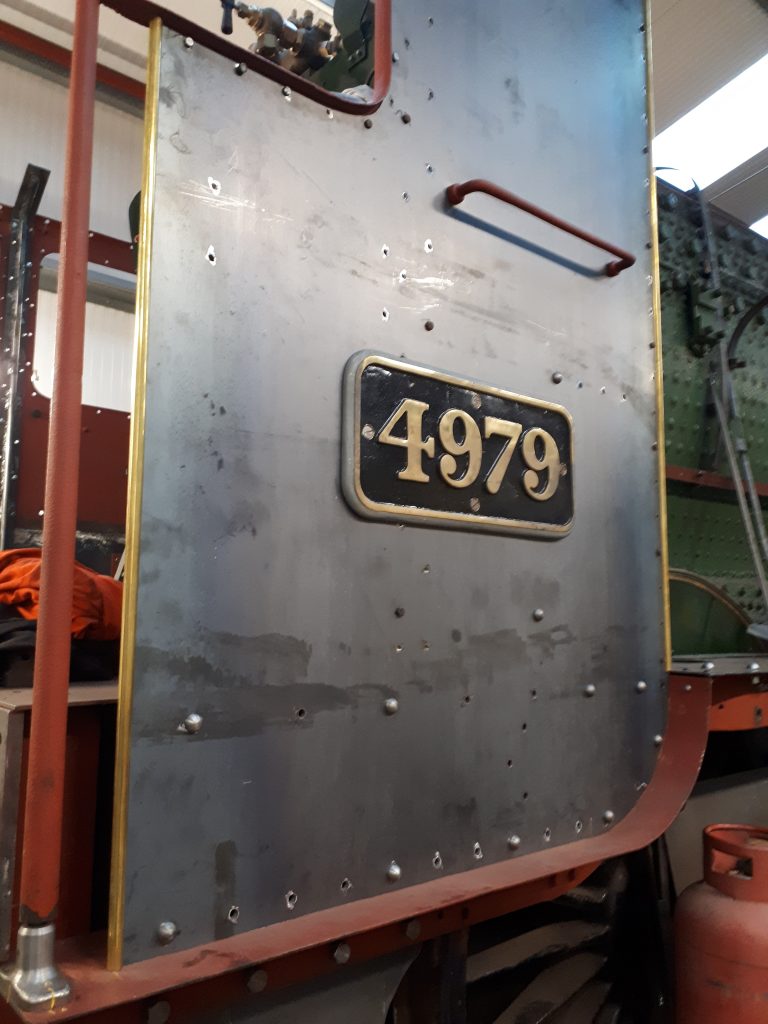 Progress has also been made on Wootton Hall where brass edging to the cab side can now be seen in place. A start has also been made on bringing together the components for the brake gear so that it can be assembled on the tender.
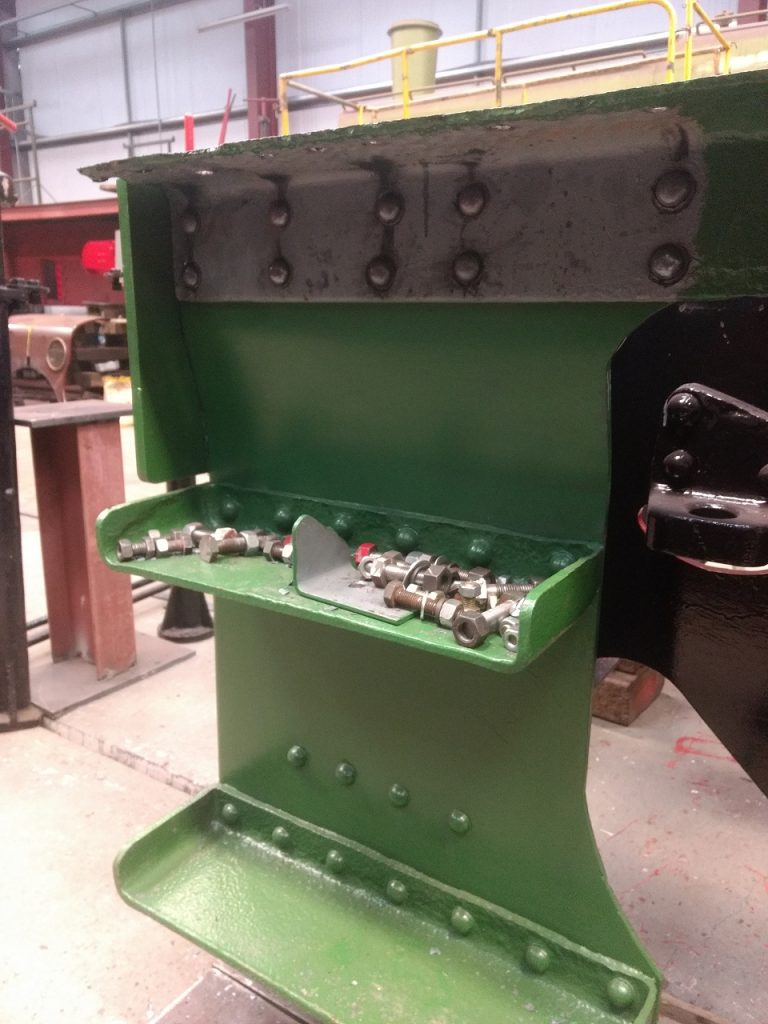 We start with the news that a milestone in the restoration of the FRT’s ‘Hall’ class 4-6-0 locomotive No. 4979 Wootton Hall was reached on Thursday when the riveting gang fitted the last rivet to the re-built tender frames. The front of the tender frames had been severely wasted by years of water and coal dust which had cascaded down from the cab floor. As followers of this blog will know, the riveting team of Matt Jervis, Keith Brewer, John Dixon and Chris Rycroft have been meeting regularly on Thursdays over the last few months and have been responsible for completing the fitting of several hundred rivets which have locked together the new steelwork with the old. The final day saw 30 rivets fitted, which is quite an effort! Well done to all!
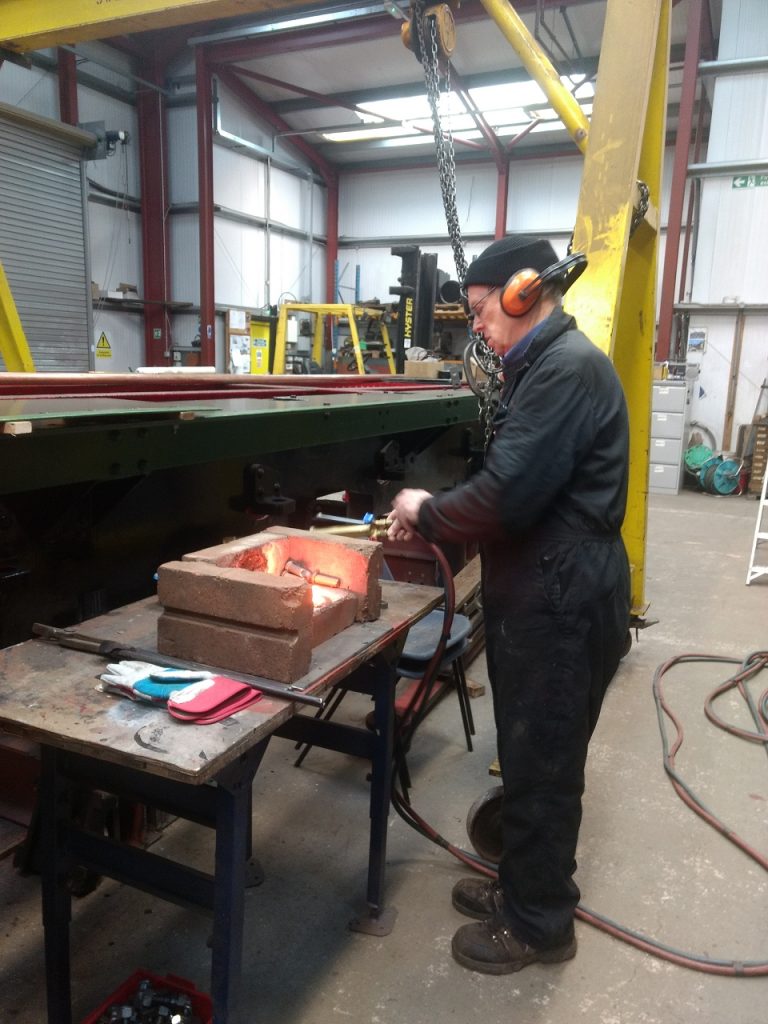 John is seen preparing the gas torch to heat up the rivets.
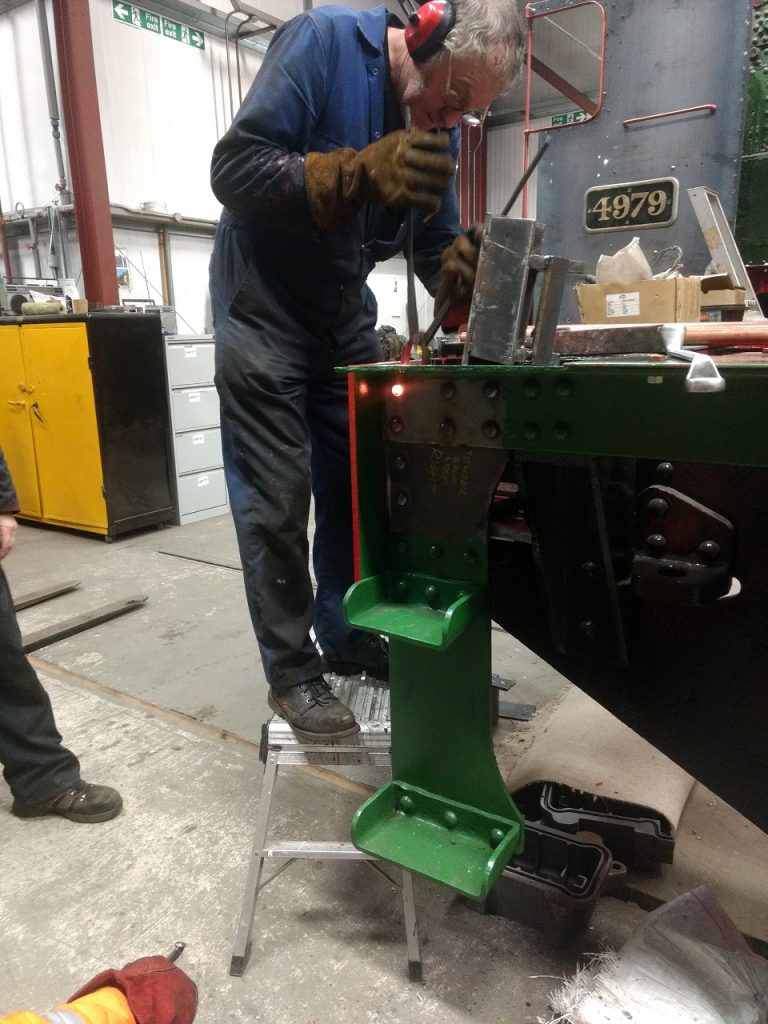 Keith is pictured holding the final hot rivet in place.
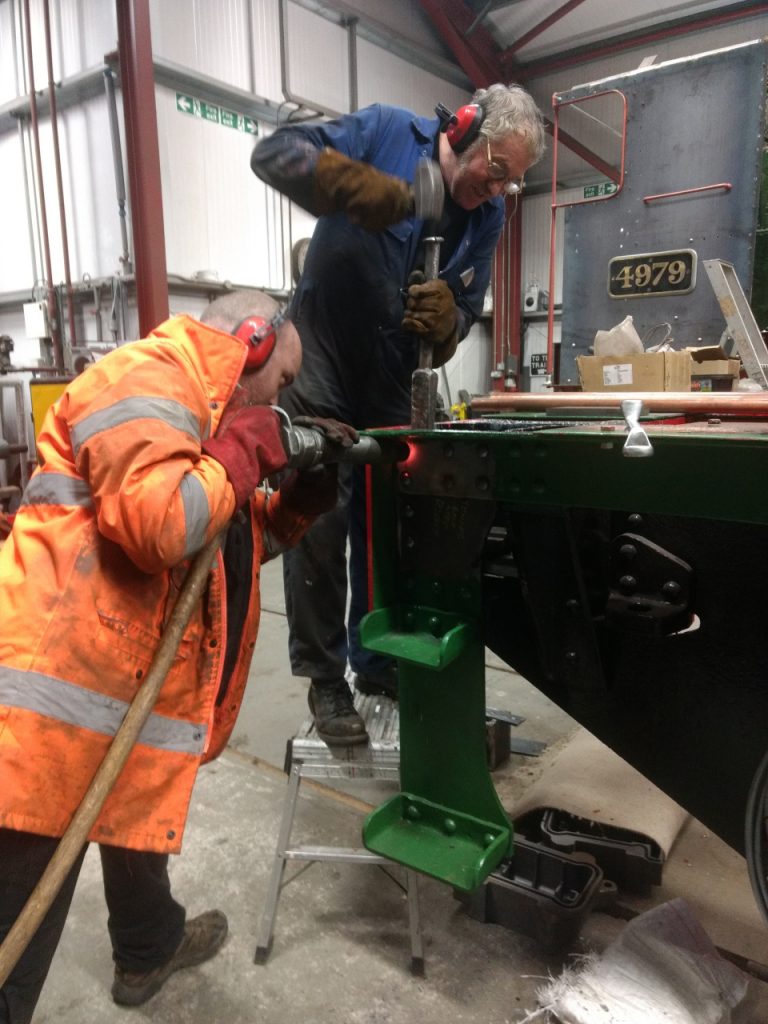 And Matt Jervis applies the force to finish the job.
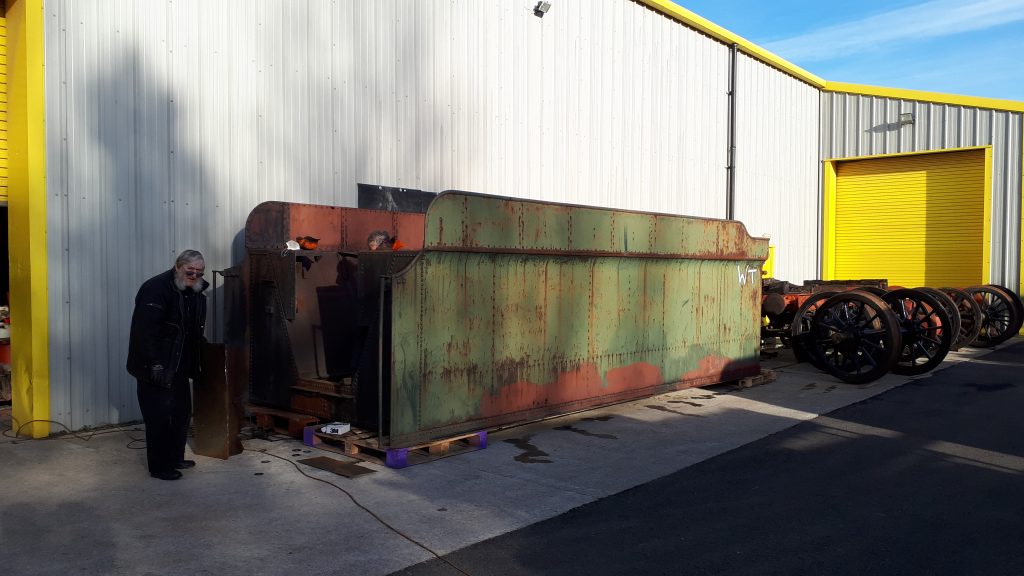 Staying with the Hall’s tender, and Alan Middleton is seen on Wednesday with the newly arrived second hand 4,000 gallon Collett tender tank recently arrived from Tyseley.
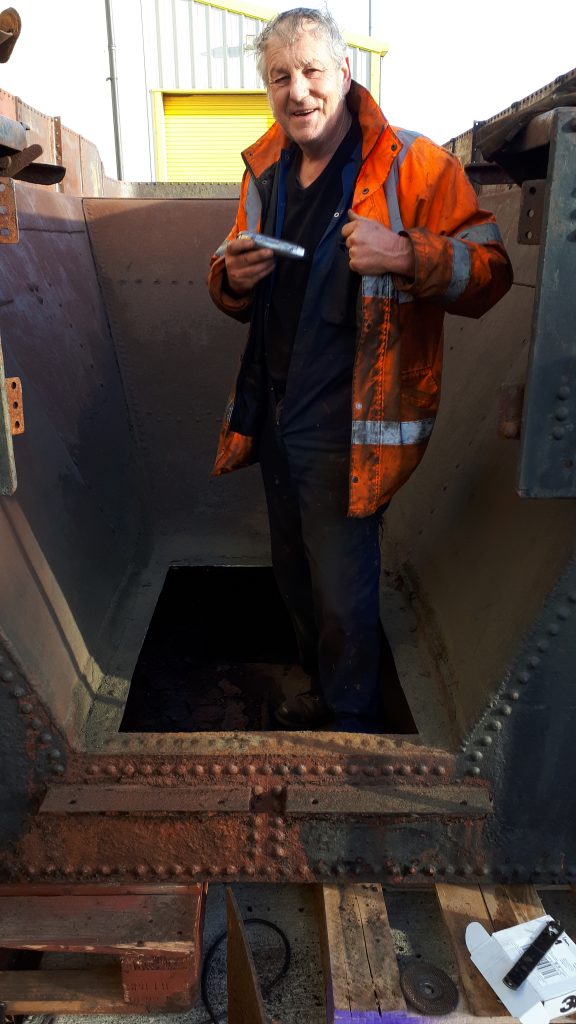 As you will see here, it didn’t take long for Keith to set to with a cutting disc to remove the corroded shoveling plate. This will also enable scale to be removed from the tender tank.
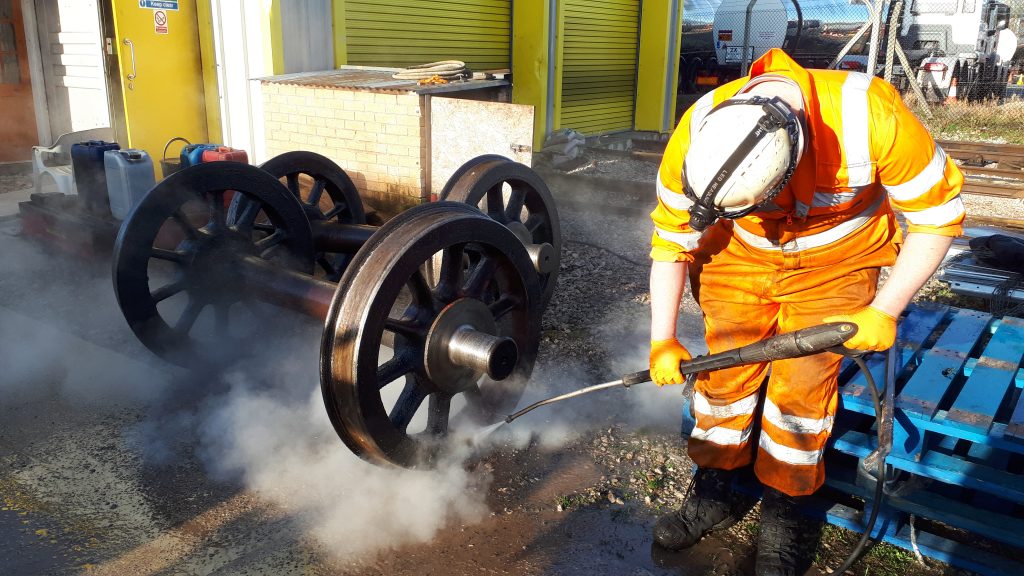 Onto other projects, and the axleboxes have been removed from FR 20’s tender wheelsets and cleaned. The wheelsets have received some attention from scrapers to remove twenty years of grime and the first set is seen here being steam cleaned by Matt Bedford.
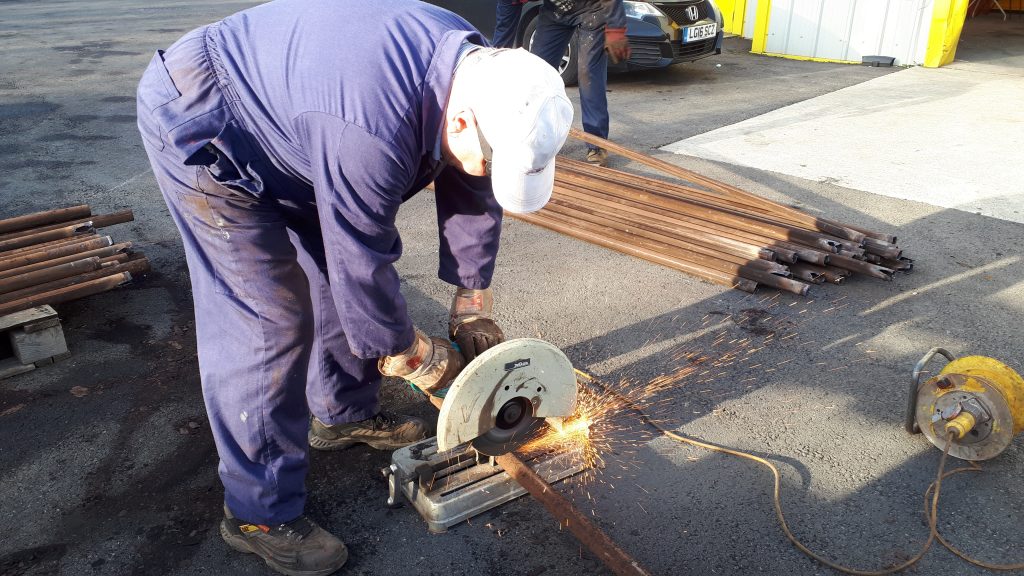 Andy Booth has completed the removal of the tubes from FR 20’s boiler and they were cut in half by John Davis before being placed in the scrap metal skip.
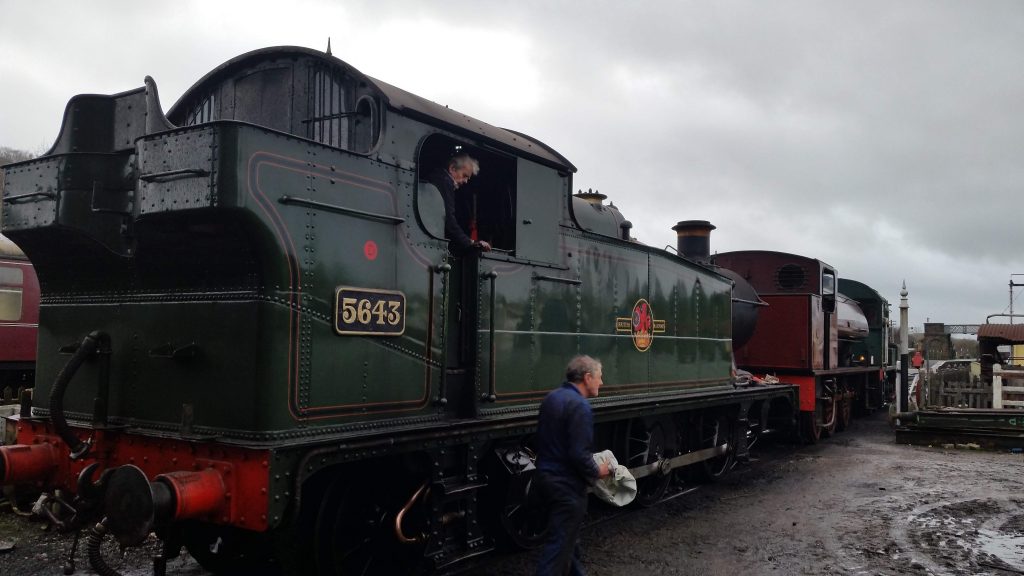 There was a visit to Embsay on Saturday by Keith, Fred and Mike. Fred and Mike cleaned below the running plate on 5643 whilst Keith attacked the inside motion. Both 5643 and Cumbria were drawn outside the shed to allow the water to be drained from the boilers and for Cumbria’s spare springs to be loaded.
 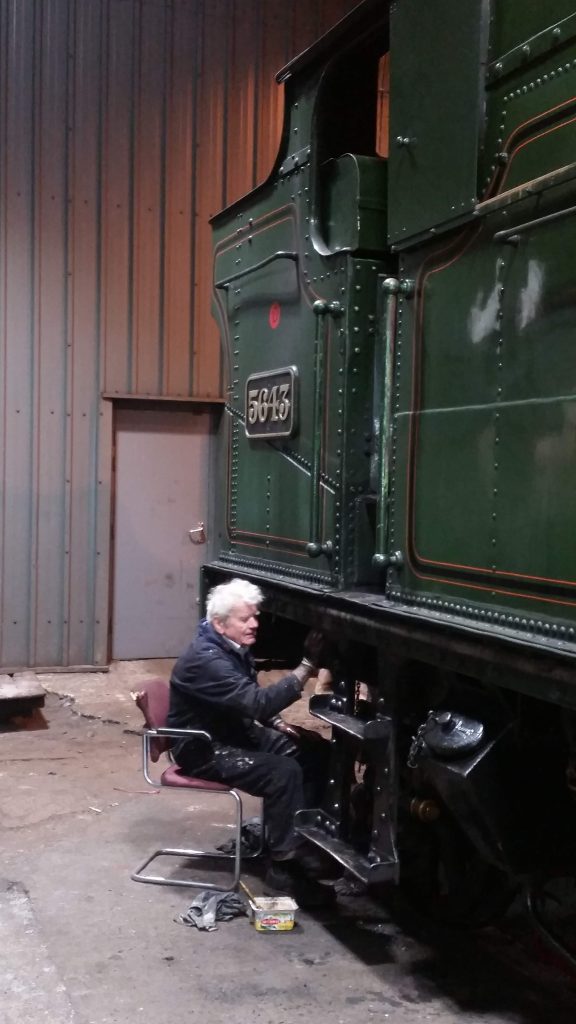 There was then time to polish up the bright work.
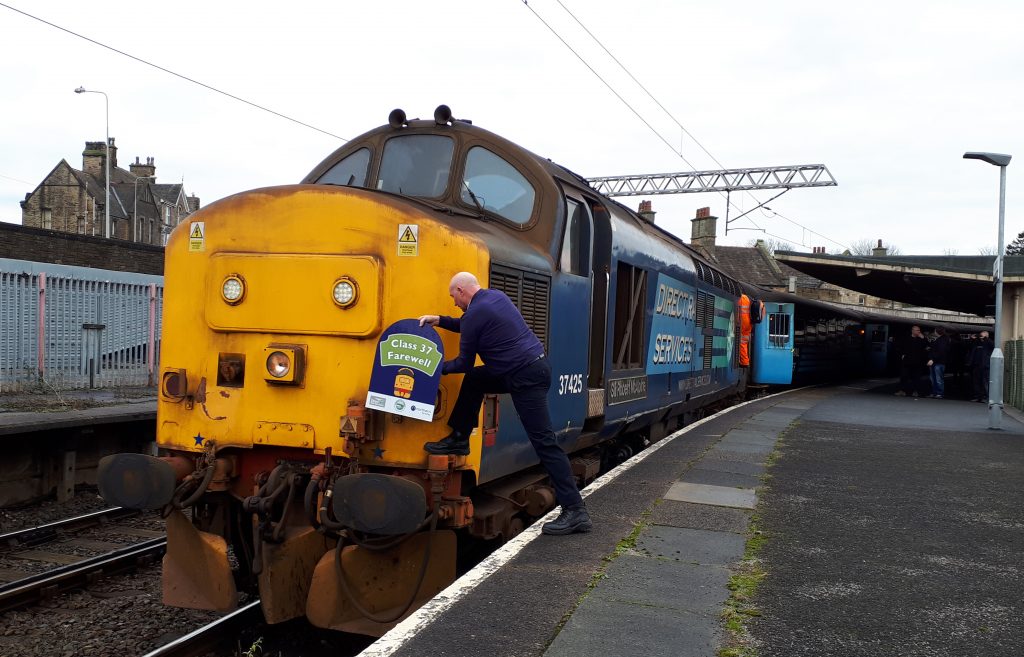 This marked the end of regular loco-hauled services along the Cumbrian Coast. The Class 37 diagrams are now covered by Class 156 diesel multiple units, themselves now around thirty years old.